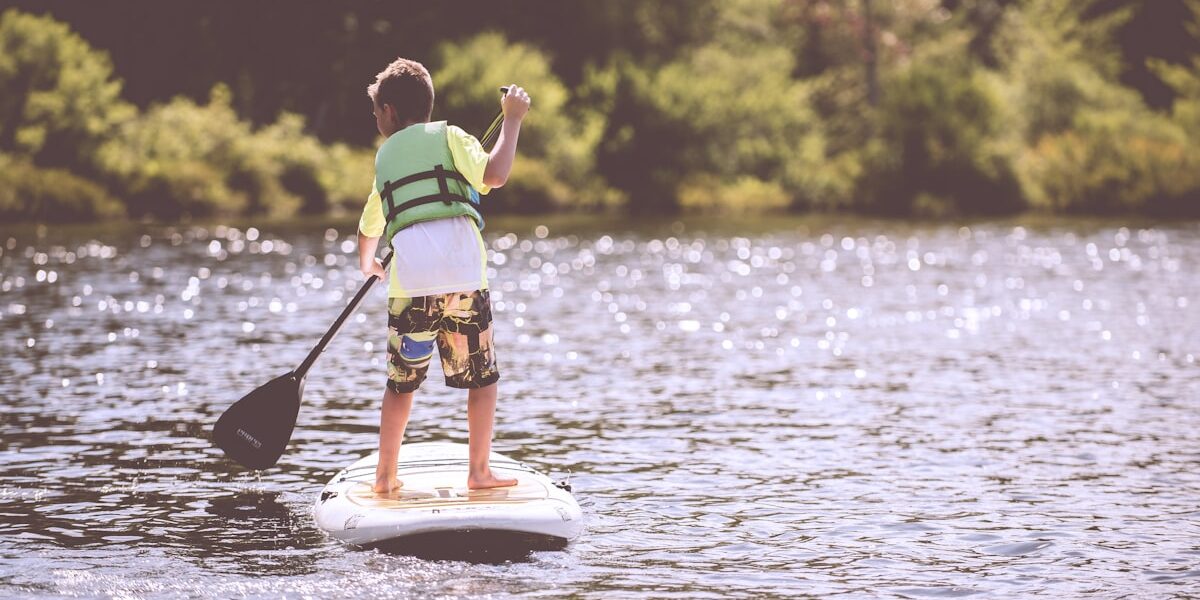
A reliable stand-up paddleboard checklist starts with the items that keep you afloat, attached to the right equipment, visible, and able to call for help. After those essentials, add clothing, navigation, hydration, and repair gear for the water and conditions you expect.
Important: Rules vary by location. In the United States, the Coast Guard considers a SUP used beyond the narrow limits of a swimming, surfing, or bathing area to be a vessel. Check federal, state, and local requirements before launching.
SUP essentials: the quick checklist
- Stand-up paddleboard in serviceable condition
- Correctly sized paddle, plus a spare on remote trips
- Properly fitted, activity-appropriate life jacket
- Leash appropriate for the environment
- Whistle or other required sound-producing device
- Water, sun protection, and weather-appropriate clothing
- Waterproof communication device
- Route, weather, wind, tide, and current information
- Emergency contact and a float plan left with someone ashore
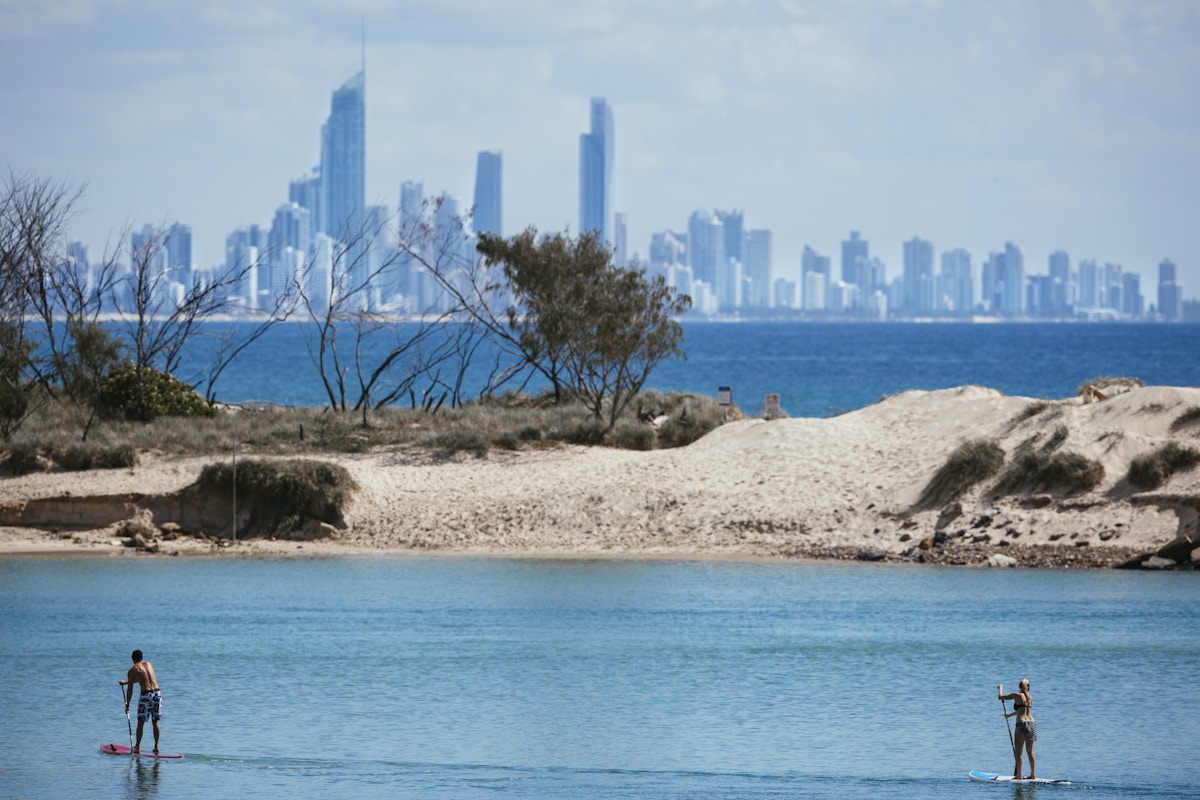
Board, fin, and paddle
Inspect the board before each outing. On an inflatable SUP, check the valve, seams, recommended pressure, and pump gauge. On any board, confirm the fin is secure and the deck pad and carry handle are sound. Pack the correct fin hardware and a small repair kit suitable for your board.
Paddle length affects posture and control. Adjustable paddles are convenient for shared boards and changing conditions, but the clamps must hold securely. If your setup never feels natural, our guide explains why SUP paddle length can feel wrong.
Life jacket and signaling equipment
Use a U.S. Coast Guard-approved life jacket that fits the intended wearer and is appropriate for the activity. A life jacket carried on the deck cannot help much if you become separated from the board, so wearing it is the safer default. Inflatable devices have use restrictions and require maintenance; read the approval label and instructions rather than assuming every belt pack is suitable for every paddler.
The Coast Guard says vessels under 39.4 feet must have a way to make an efficient sound signal, such as a whistle or horn. Attach a marine whistle where you can reach it. Low-light and nighttime outings may also trigger navigation-light requirements, so check the current rules for your waters and carry a bright waterproof light.
Choose the right leash for the water
A leash helps prevent the wind or waves from taking a board away after a fall, but the wrong leash can create an entrapment hazard. The American Canoe Association distinguishes among environments:
- Flat water: a coiled or hybrid leash keeps excess cord off the water.
- Surf: a straight leash is designed to stretch as the board is pushed by waves.
- Moving or whitewater: an ankle or calf leash can snag. Seek qualified instruction; if a leash is used, ACA guidance calls for a waist-mounted quick-release system reachable with either hand.
Leash decisions depend on local hazards, including current, strainers, boat traffic, and surf. Do not treat one leash configuration as universal.
Clothing and exposure protection
Dress for the water temperature, not only the air. Cold-water immersion can quickly impair breathing and movement. Depending on conditions, that may mean a wetsuit or drysuit, insulating layers designed for paddling, gloves, and footwear. Avoid waterlogged cotton in cold conditions.
For warm-weather paddles, bring drinking water, broad-spectrum sunscreen, a brimmed hat or secure cap, sunglasses with a retainer, and lightweight sun-protective clothing. Store keys and essential medication in a waterproof container attached to the board or your PFD.
Communication, navigation, and float plan
A phone in a waterproof case is useful near reliable coverage; a charged VHF marine radio may be more appropriate in coastal areas where local practice and radio coverage support it. Keep the device on your body rather than loosely on the board. Offline maps, a compass, tide information, and local charts can supplement—not replace—route knowledge.
Tell a responsible person where you are launching, your route, who is with you, and when to call for help if you do not return. Update them when the trip ends. Check the marine forecast and observe conditions at the launch; forecasts do not guarantee that the water will remain manageable.
Day-trip comfort and repair gear
- Dry bag secured to the board
- Water and food appropriate for the trip length
- Small first-aid kit and needed medication
- Board-specific patch kit and valve tool for inflatables
- Spare fin hardware and a compact multitool
- Carry strap or cart for a long approach
- Trash bag to pack out waste
If carrying the board is the part that derails your outing, see these fixes for a SUP that feels hard to carry.
Trip-specific additions
Coastal or tidal water
Add tide and current data, an appropriate communications plan, visibility gear, and extra exposure protection. Understand offshore winds and identify alternate landing points before launching.
Rivers
Moving water requires skills beyond a flat-water checklist. Learn to recognize strainers, low-head dams, and entrapment hazards; wear suitable protective equipment; and get instruction on quick-release systems and rescue technique.
Long or remote paddles
Add redundant communication and navigation, a spare paddle, extra food and water, a more capable repair kit, and an emergency plan appropriate to the remoteness. Do not let extra equipment substitute for training or conservative decisions.
Five-minute pre-launch check
- Confirm the board, fin, paddle, PFD, leash, and signaling device are ready.
- Check weather, wind direction, tides or river flow, and daylight remaining.
- Secure every item and place communication gear on your body.
- Leave a float plan and establish a turnaround time.
- Start in conditions comfortably below your skill limit and practice remounting near shore.
New paddlers can use our step-by-step guide to standing on a SUP for the first time. Equipment matters, but practiced balance, self-rescue, and sound judgment are what turn a checklist into a safer day on the water.
Official safety references
- U.S. Coast Guard Boating Safety FAQ
- U.S. Coast Guard life jacket guidance
- American Canoe Association SUP leash guidance
Turn the equipment list into a launch decision with our SUP safety checklist, paddleboarding weather guide, and beginner first-session progression.
Protect the equipment after the trip with our inflatable and hard paddleboard storage guide, including drying, pressure, support, heat, and inspection steps.
Use the paddleboard transport checklist to secure the board, rack, straps, and loose equipment before driving.
Planning to add rods, tackle, a cooler, or an anchor? Use the SUP fishing rigging and safety guide to balance and secure the load without blocking the stance or remount path.




Stay in the loop
Get the latest sup spots updates delivered to your inbox.