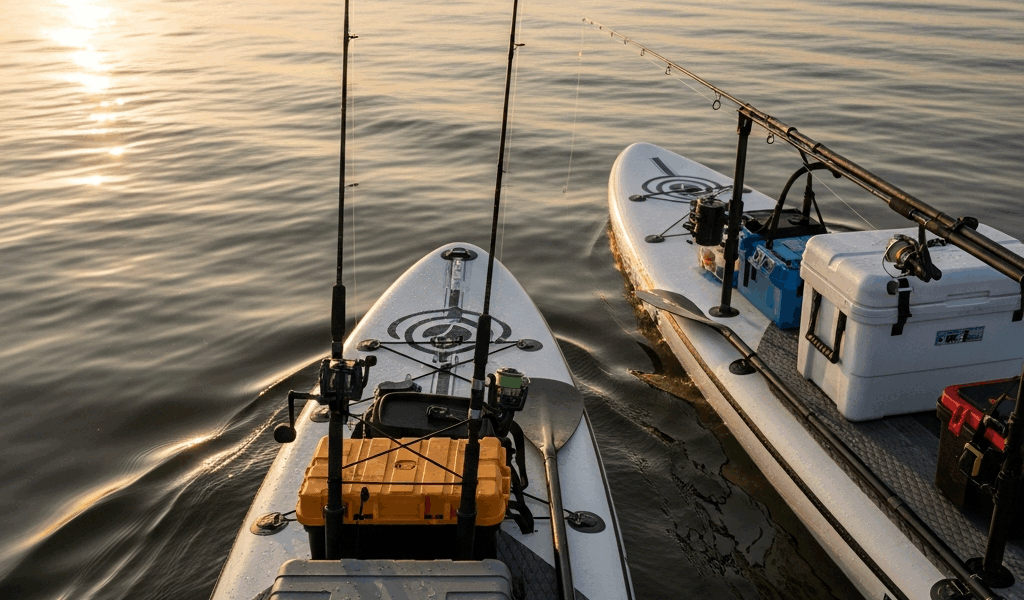
SUP fishing works best when the board remains simple, balanced, and easy to remount. Start with a stable board whose published capacity covers you and every item aboard, then add only the equipment you can secure and operate without blocking your stance. There is no universal minimum board width or one rig that suits every angler; water, weather, body size, skill, board design, and fishing method all change the answer.
This article includes affiliate links. We may earn a commission at no extra cost to you.
Start With the Board’s Limits
Check the board manual or manufacturer specifications for maximum load, inflation pressure, attachment-point use, and compatible accessories. The total load includes the paddler, clothing, water, cooler, tackle, rods, anchor system, electronics, and anything you bring home. Staying below a printed maximum does not guarantee good handling: added weight, raised seating, and poorly placed cargo can reduce stability and freeboard.
Before fishing, test the loaded setup in calm, shallow water near a usable landing. Practice stepping aboard, turning, kneeling, sitting, standing, reaching for gear, and remounting after a fall. If the deck feels crowded or the board becomes difficult to control, remove equipment.
Inflatable or Hard Paddleboard?
An inflatable is easier to store and transport and often has a forgiving deck underfoot. It must remain within its maker’s pressure range and needs protection from hooks, knives, fish spines, and abrasive structure. A hard board avoids inflation time and may offer efficient glide or integrated fishing features, but it needs protected transport and storage and can be damaged by impacts.
Choose from verified specifications rather than category assumptions. Look at capacity, dimensions, hull shape, attachment locations, deck-pad area, carry weight, fin arrangement, and the manufacturer’s intended use. A purpose-built fishing model may simplify rigging, but it does not replace balance practice or safety planning.
A Minimal SUP Fishing Setup
- A properly fitted, activity-appropriate U.S. Coast Guard-approved life jacket or buoyancy aid, worn according to its label.
- A whistle and protected means of communication suited to local coverage and distance from help.
- A paddle, compatible fin, and leash system selected for the environment.
- One small tackle container with lures protected from accidental contact.
- A rod secured in a board-compatible holder or with a short equipment tether that cannot entangle the paddler.
- Water, sun protection, required licenses, and any legally required fishing or boating equipment.
The Coast Guard states that a SUP used beyond the narrow limits of a swimming, surfing, or bathing area is considered a vessel under federal law and must carry the required life jacket. State and local rules can add requirements. Wearing the device is safer than strapping it where you may be unable to reach it after a fall.
Place Weight Low and Near the Center
Rig the empty board on land, then load it gradually at the water. Keep heavy items low and close to the board’s center without covering the carry handle, stance area, valve, or remount path. Do not assume every D-ring or bungee is rated to secure a seat, cooler, anchor, or person; consult the board maker.
A crate or cooler can organize gear and provide a seat only when the board manufacturer permits the load and attachment method. Raising your body increases leverage over the board, so test seated casting and transitions close to shore. Keep the deck clear enough to drop to your knees quickly.
Manage Hooks, Line, and Rods
Carry fewer rods until the routine is proven. Position holders so rods do not interfere with the paddle stroke, casting path, leash, or remount. Cover unused hooks and keep line clippings in a container. Secure pliers and a line cutter where they are reachable but cannot roll underfoot.
When a fish is on, lower your center of gravity before reaching or changing direction. Keep the rod and line away from your leash and body. If conditions, boat traffic, or a fish pull the board into an unsafe position, release the line rather than sacrifice control of the craft.
Anchor Only With the Right Training and System
Anchoring a small paddlecraft adds entanglement and capsize hazards. Current, waves, wind, changing water level, submerged objects, and boat wakes can load the line suddenly. Never tie an anchor line to your body or improvise an attachment point. Use only a board-compatible system, learn how to deploy and retrieve it, keep a suitable line cutter accessible, and understand when a quick-release arrangement is necessary.
Do not anchor in navigation channels, near dams or spillways, in strong or unfamiliar current, or where local rules prohibit it. Moving-water SUP and anchoring skills deserve hands-on instruction. Drifting or fishing from shore may be the safer plan.
Leash Choice Depends on the Water
A leash can keep a board from blowing away on open, unobstructed water, but a leash can snag in current. Do not apply a universal “always wear a coiled leash” rule to rivers, tidal races, debris, docks, or other entrapment environments. Get venue-specific instruction and use the type and release system recommended for that water. A leash is not a substitute for a life jacket.
Plan the Session Before Launching
Check wind direction and gusts, storms, visibility, current, tide, waves, water temperature, boat traffic, launch access, and fishing restrictions. Wind can make a loaded SUP difficult to return on, so begin into manageable wind when local conditions allow and keep the route conservative. Use our SUP weather go/no-go checklist and complete SUP safety plan.
Leave a float plan with a responsible person: where you will launch, route, vehicle description, equipment, who is aboard, and when to call for help. Fish with a capable partner when the conditions or remoteness warrant it.
Pre-Launch Rigging Check
- Confirm the loaded board remains within manufacturer limits.
- Wear the life jacket and attach the environment-appropriate leash system.
- Secure every rod, tackle box, cooler, and tool without creating entanglement loops.
- Keep the stance, paddle stroke, valve, carry handle, and remount path clear.
- Test balance and controls close to the landing before traveling farther.
- Abandon the launch if wind, current, temperature, visibility, traffic, or equipment exceeds the plan.
After the trip, remove hooks and loose tackle before handling the board, then follow the paddleboard maintenance checklist. Rinse salt and debris, dry the deck and fittings, and inspect attachment points, leash, fin, and inflatable surfaces.
Official Safety References
- U.S. Coast Guard Boating Safety FAQ, including SUP life-jacket requirements.
- U.S. Coast Guard life-jacket selection and wear guidance.
- BoatUS Foundation paddlesports and fishing safety guidance.

Stay in the loop
Get the latest sup spots updates delivered to your inbox.