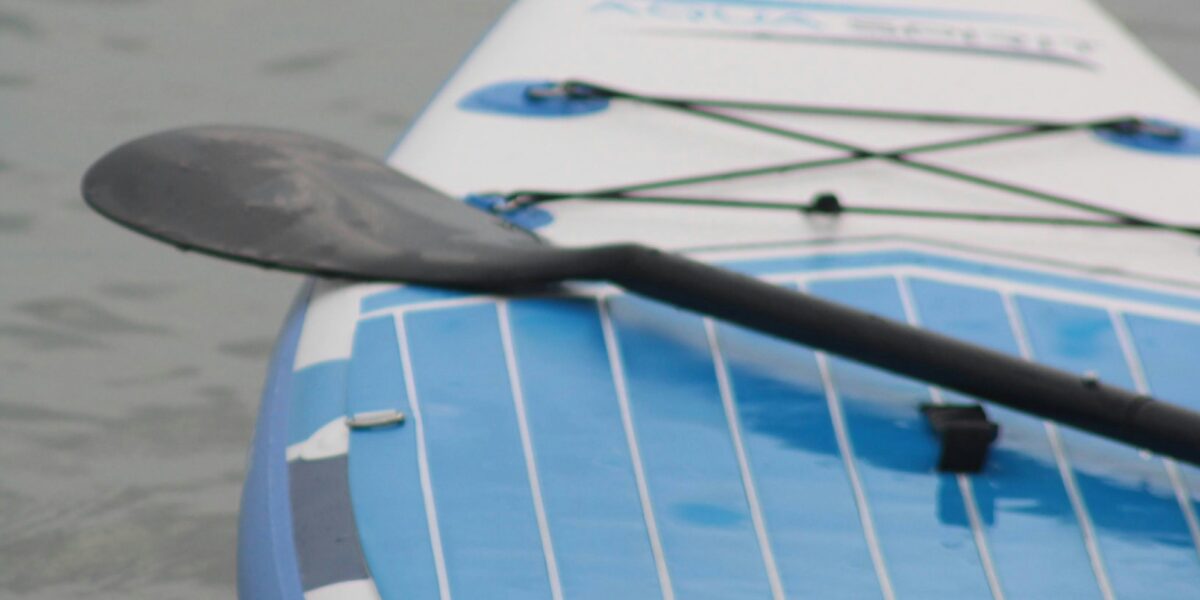
A simple paddleboard maintenance routine prevents small problems—loose fins, grit around an inflatable valve, lifting deck-pad edges, and unnoticed dings—from becoming trip-ending failures. The right routine depends on whether you own an inflatable or a hard board, but the sequence is the same: rinse, dry, inspect, and store it within the manufacturer’s limits.
After Every Paddle
- Remove loose gear. Take off the leash, fin, shoulder strap, and anything attached with bungees. Follow the board maker’s instructions when removing a fin or opening a valve.
- Rinse away salt, sand, mud, and plant material. Fresh water is especially useful after saltwater use. Pay attention to fin boxes, tie-down points, handles, seams, and the valve area without forcing debris deeper into a fitting.
- Use mild cleaner only when needed. Start with water and a soft cloth or sponge. Avoid solvents, harsh abrasives, pressure washers, and unapproved protectants because they may harm graphics, adhesives, coatings, or PVC.
- Dry the board completely. Let water drain from deck-pad grooves and fittings before rolling an inflatable or putting any board into a bag. A damp, sealed board can develop odor, staining, or mildew around fabric accessories.
Five-Minute Inspection Checklist
Run your hands and eyes over the board in good light. On a hard board, look for cracks, punctures, soft areas, crushed rails, or water entering a damaged skin. On an inflatable, inspect seams, valve surroundings, D-rings, and the underside for cuts, abrasion, bubbling, or adhesive separation. Do not keep using a board with structural damage or a suspected leak until it is assessed and repaired.
- Confirm the fin and fin box are undamaged and the fastening hardware is present.
- Check the leash attachment point and the leash itself for cuts, worn swivels, or damaged hook-and-loop material.
- Look for a deck pad that is lifting, torn, or trapping grit.
- Inspect handles, bungees, D-rings, and accessory mounts before trusting them with a load.
- Check the paddle shaft, adjustment clamp, blade, and handle for cracks or looseness.
Need to address a puncture? Use the inflatable SUP leak and repair guide and the adhesive or repair-kit instructions supplied by your manufacturer. Never improvise a structural repair immediately before launching.
Inflatable Valve and Pressure Care
Inflate only within the pressure range printed on the board or stated in its manual. Pressure can rise as the board heats in direct sun or a hot vehicle, so move it to shade and follow the manufacturer’s guidance rather than automatically adding more air. Keep sand away from the valve and do not insert tools, lubricants, or cleaners unless the manufacturer explicitly directs you to do so.
If you hear air near the valve, first confirm that the cap and valve are being used correctly. A valve tool is not a universal fix: some adjustments must be made only with the board deflated, and construction differs by brand. Use the board-specific manual or contact its maker.
Monthly and Seasonal Maintenance
During the paddling season, do a more deliberate inspection every month and after any hard impact. At season’s end, clean and dry the complete kit, inventory repair materials, and replace expired or damaged safety equipment. Test the pump and gauge against the manufacturer’s procedure, inspect roof-rack straps for cuts or UV damage, and check removable hardware for corrosion.
Do not wax a board, condition a deck pad, or apply UV spray simply because a generic checklist recommends it. Surface treatments vary by material and can make the deck slippery or interfere with a future adhesive repair. Use only products the board maker approves.
Store and Transport Without Creating New Damage
Maintenance continues off the water. Keep the board clean, dry, out of prolonged sun and extreme heat, and supported as its maker recommends. Our paddleboard storage guide separates inflatable and hard-board precautions. For the drive, use the SUP transport checklist and follow the vehicle, rack, carrier, and board instructions.
Before the Next Launch
Reinstall the fin correctly, confirm the valve cap is secure, check the board’s pressure or hard-board condition, and inspect the complete leash. Make the safety decision on shore: if a fitting, attachment point, fin box, seam, or hull looks questionable, postpone the session. Preventive maintenance is inexpensive precisely because it gives you time to solve problems before the board is on the water.
Sources and further guidance: consult your board’s manual first; see Red Equipment’s paddleboard maintenance guidance for a manufacturer example.


Stay in the loop
Get the latest sup spots updates delivered to your inbox.