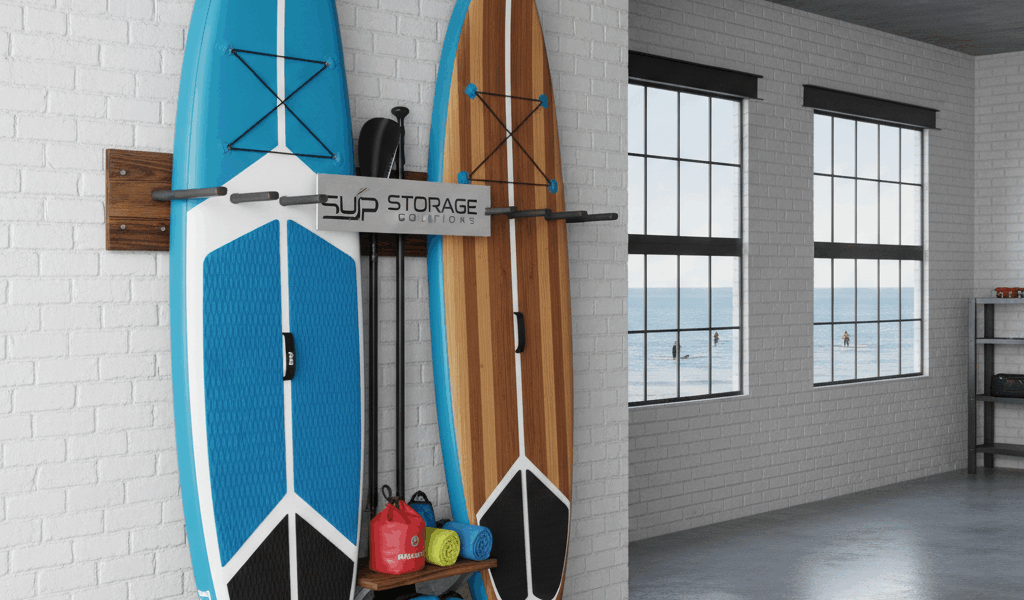
Store a paddleboard clean, completely dry, protected from sun and extreme heat, and supported so its shape is not distorted. For an inflatable SUP, follow the manufacturer’s instructions for rolled or partially inflated storage and reduce pressure for long-term inflated storage. For a hard board, use padded support points and prevent straps or racks from creating concentrated pressure.
This article includes affiliate links. We may earn a commission at no extra cost to you.
SUP storage checklist
- Rinse salt, sand, mud, and debris with fresh water.
- Use only cleaners approved by the board manufacturer.
- Dry the deck pad, valve area, fin box, handles, seams, and accessories completely.
- Remove detachable fins, electronics, leashes, and loose gear.
- Inspect for cuts, bubbles, soft spots, seam changes, cracks, or hardware damage.
- Choose a cool, dry location away from direct sunlight and large temperature swings.
- Support the board evenly and keep heavy objects off it.
How to store an inflatable paddleboard
Inflatable boards can generally be stored rolled or inflated, but the exact pressure, folding direction, valve procedure, and bag configuration depend on the model. Follow the owner’s manual rather than applying one brand’s pressure number to every board.
Rolled storage
Deflate according to the manual, make sure the board is fully dry, and roll or fold it in the specified direction without forcing sharp creases. Protect the valve and fin boxes. Do not cinch straps so tightly that they cut into the material. Store the packed board where pests, standing water, sharp tools, and heavy objects cannot damage it.
Inflated storage
Release pressure to the manufacturer’s storage recommendation, particularly when temperature may rise. Heated air expands and can raise internal pressure. Keep the board out of direct sun and hot vehicles. Support it flat or on wide padded straps that distribute the load; do not hang it from handles unless the manufacturer explicitly permits that method.
How to store a hard paddleboard
Use wide padded cradles or straps at structurally appropriate points. Avoid narrow hooks, bare metal, and excessive strap tension. A wall rack saves floor space, a ceiling rack can work when safely anchored, and a freestanding rack avoids wall installation. Whatever the method, the board should not bow or rest on the fin.
Use a breathable, board-appropriate cover when dust or incidental contact is a concern. Do not seal a damp board in a non-breathable bag.
Garage, shed, or apartment?
- Climate-controlled interior: usually the easiest environment for temperature and humidity control.
- Garage: workable if it stays dry and does not reach damaging heat or cold extremes.
- Shed or attic: risky when temperature swings, humidity, pests, or roof leaks are uncontrolled.
- Vehicle: not long-term storage; parked vehicles can become extremely hot.
What to do before seasonal storage
Photograph the board and serial number, record any existing damage, check warranty-care requirements, and repair problems before they expand. Lubricants, solvents, adhesives, and UV treatments must be approved for the board’s materials. Generic household products can weaken PVC, adhesives, paint, or deck pads.
If an inflatable loses pressure or shows a suspected leak, use our inflatable SUP leak diagnostic before packing it away.
Store the paddle and accessories
Rinse and dry the paddle, separate adjustable sections if the manufacturer recommends it, and remove salt or grit from clamps and joints. Store shafts horizontally with even support or vertically where they cannot fall. Dry life jackets, leashes, pumps, bags, and repair kits before packing them. Remove batteries from electronics when their instructions call for it.
Monthly storage check
During long storage, look for moisture, mildew, pests, pressure changes, rack marks, soft spots, seam separation, corrosion, and bag damage. Correct the storage environment before damage becomes permanent.
Manufacturer references
- Red Equipment paddleboard storage guidance
- Red Equipment product care instructions
- iROCKER inflatable SUP storage guide
Manufacturer guidance checked August 2, 2026. Always prioritize the manual for your exact board.
Before putting a board away, complete the paddleboard cleaning and inspection checklist. For the trip, use the SUP transport and load-security guide.



Stay in the loop
Get the latest sup spots updates delivered to your inbox.