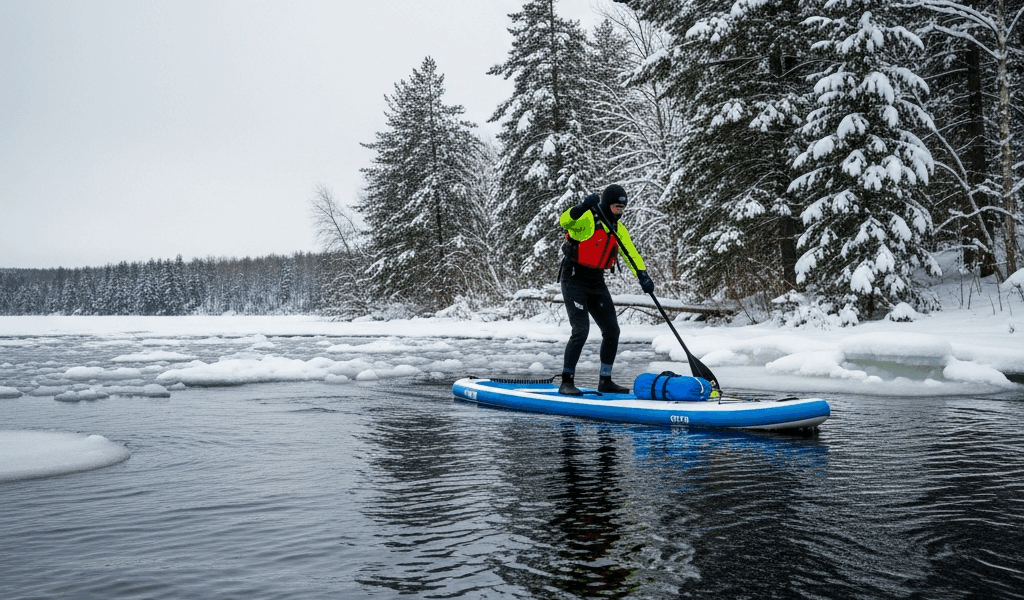
Cold-water paddleboarding requires preparation for immediate immersion—not merely comfort while standing. Wear a suitable life jacket, dress for the water temperature, use the correct leash system for the environment, stay close to a viable landing, carry reliable communication, and practice remounting before extending the route. If equipment, training, or conditions leave little margin, stay ashore.
This article includes affiliate links. We may earn a commission at no extra cost to you.
This is general U.S. safety information, not a personalized temperature chart or substitute for local instruction. Exposure risk varies with water and air temperature, wind, waves, current, clothing, health, exertion, rescue time, and whether you can get completely out of the water.
Why cold water is dangerous before hypothermia
The National Weather Service explains that sudden cold-water immersion can cause involuntary gasping, rapid breathing, increased heart rate and blood pressure, panic, and impaired thinking. Physical incapacitation can then reduce control of the hands, arms, and legs. Those immediate responses can create a drowning emergency before a prolonged drop in core temperature becomes the main issue.
A popular “1-10-1” mnemonic is not a guaranteed survival clock and should not be used to time a rescue or justify launching. Individual response and conditions vary. The useful lesson is simply that breathing control and useful movement may deteriorate quickly. Plan to avoid immersion, remain afloat if it occurs, and exit promptly.
Cold-water SUP checklist
- Measure or obtain a reliable water temperature, not only the air forecast.
- Wear a properly fitted, Coast Guard-approved life jacket appropriate to the activity.
- Use immersion clothing chosen for the actual water and expected rescue time.
- Select a leash for the environment; snag-prone moving water needs specialized training.
- Choose protected water with a close, usable landing and conservative route.
- Check wind, gusts, storms, visibility, waves, current, tide, and changing conditions.
- Carry a whistle and protected communication suitable for local coverage and remoteness.
- Leave a float plan and paddle with a capable partner when conditions warrant.
Wear the life jacket
The Coast Guard says a SUP used beyond the narrow limits of a swimming, surfing, or bathing area is considered a vessel under federal law and must carry the required life jacket. For cold water, wear it. A device tied to the board cannot support your airway if you are separated or unable to reach it.
Read the approval label and instructions. Inflatable life jackets have age, weight, activity, and wearing restrictions and depend on correct maintenance and deployment. Foam devices provide inherent flotation but also must fit and be appropriate to the activity. State and local requirements can differ.
Wetsuit or drysuit?
Do not choose exposure clothing from a universal internet temperature table. A wetsuit reduces heat loss by trapping and warming a thin layer of water; its performance depends on fit, thickness, seams, condition, coverage, activity, and water movement. A drysuit keeps external water out but requires suitable insulating layers, seals, maintenance, and training.
Ask a qualified local paddlesports professional about the waterway, season, and planned rescue time. Test equipment in controlled conditions. Clothing that feels warm while paddling may behave differently during full immersion, wind exposure, or a delayed remount.
Hands, feet, and head
Cold-related loss of hand function can prevent leash release, communication, paddle control, or climbing back onto the board. Choose footwear, gloves or mitts, and head protection compatible with the conditions and required dexterity. Avoid configurations that make safety equipment unreachable or interfere with swimming and remounting.
Leash choice in cold water
Cold water does not make one leash correct everywhere. In open, unobstructed flat water, a leash can reduce separation from the board. In rivers, tidal flow, whitewater, or snag-prone environments, an ankle leash can become an entrapment hazard. Moving-water paddlers need location-specific instruction and a reachable quick-release system appropriate to that environment.
Practice releasing and remounting with the full clothing system under controlled supervision. Thick gloves, cold hands, current, and load can change what is reachable.
Route and weather plan
Choose a short route with frequent exit options rather than relying on a single distant launch. Start by paddling against the more difficult wind or current so the return does not become the hardest leg. Avoid offshore wind and conditions that can prevent a kneeling return.
Use our paddleboarding weather go/no-go checklist for wind, storms, current, and visibility. The National Weather Service advises checking weather and water temperature and preparing to head to shore quickly if conditions deteriorate.
Practice self-rescue before traveling
Practice falling, controlling breathing, keeping the airway clear, reaching the board, and remounting close to shore with capable supervision. The complete clothing and gear system can make remounting harder. If you cannot repeatedly remount in controlled conditions, do not rely on doing so in wind, chop, current, or colder water.
For the broader equipment and communication plan, read our SUP safety essentials guide.
If you fall into cold water
- Keep your airway clear and concentrate on controlling breathing.
- Use the life jacket and board for flotation.
- Get as much of the body out of the water as safely possible.
- Move toward the closest realistic exit or signal for rescue based on conditions.
- After exit, get into a protected environment and replace wet clothing.
- Call emergency services for severe symptoms, breathing problems, confusion, loss of coordination, or inability to rewarm safely.
Do not use rigid online survival times to delay calling for help. If a cold-water immersion is becoming an emergency, contact local emergency services immediately.
Official sources
- National Weather Service cold-water hazards and safety
- U.S. Coast Guard Boating Safety FAQ
- U.S. Coast Guard paddleboard vessel determination
- National Weather Service inland boating guidance
Safety references checked August 2, 2026.
Cold-water mileage is optional. Use the winter SUP training plan for aerobic, strength, balance, and technique work that can be completed safely off the water.


Stay in the loop
Get the latest sup spots updates delivered to your inbox.