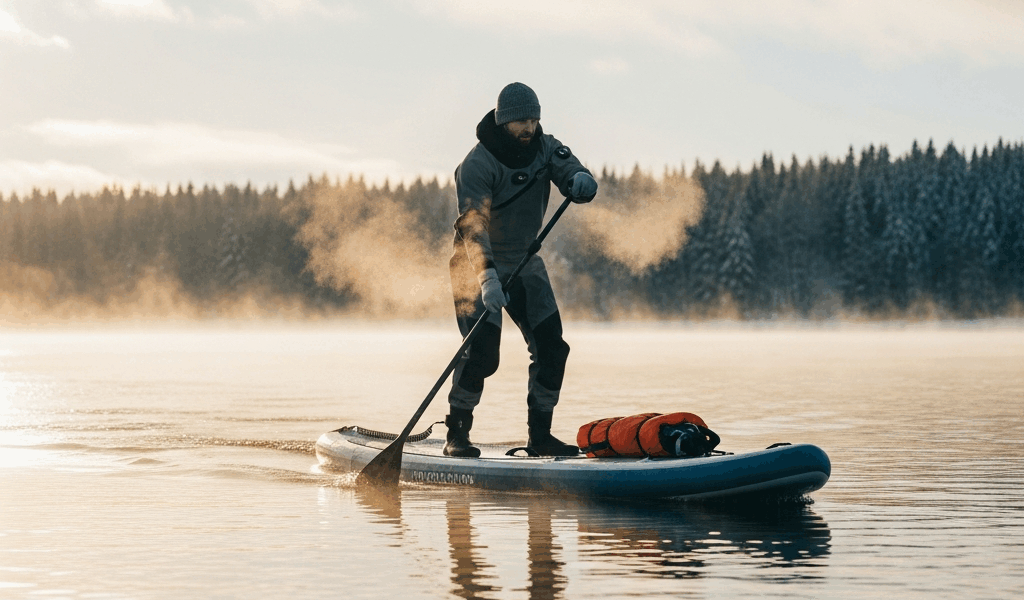
Winter SUP training does not require risky cold-water mileage. A useful off-season keeps general aerobic fitness, major muscle groups, balance, and paddle mechanics ready while giving joints and overworked tissues time to recover. On-water sessions are optional and should happen only when your immersion protection, rescue skills, equipment, and conditions provide a conservative margin.
This guide focuses on training structure, not a universal cold-water clothing chart. For life jackets, wetsuits and drysuits, leash selection, communication, routes, and self-rescue, use the dedicated cold-water SUP immersion and rescue guide.
Choose the Winter Goal
Start by deciding what spring paddling needs from you. A recreational paddler may want comfortable hour-long outings. A tourer may prioritize sustained aerobic work and efficient technique. A racer may need a coach-built progression. A returning paddler may simply need consistency without aggravating an injury.
Write down one measurable outcome for the next six to eight weeks, such as completing three activity sessions most weeks or maintaining a comfortable walking, cycling, swimming, or ergometer session. Avoid promising a performance jump from a generic plan.
Build the Week Around General Guidelines
The U.S. Physical Activity Guidelines say adults gain substantial health benefits from 150 to 300 minutes of moderate-intensity aerobic activity per week, or the vigorous equivalent, plus muscle-strengthening activity on at least two days. Those are population health targets—not a minimum SUP training prescription and not an instruction to jump immediately to that volume.
If you are inactive, start with small amounts and build gradually. Health conditions, pregnancy, disability, recent illness, medication, pain, and prior injury may require individualized guidance from an appropriate clinician or qualified exercise professional.
A Flexible Off-Season Template
- Two aerobic sessions: walking, hiking, cycling, swimming, rowing, or another activity you can perform with controlled technique.
- Two strength sessions: train major movement patterns at a manageable load, leaving recovery between hard sessions.
- One balance and mobility session: low-risk work on a stable surface, not unstable tricks performed to exhaustion.
- One paddle-technique touchpoint: an easy protected-water session when safe, or dry-land rehearsal and video study.
- At least one recovery day: easy movement or full rest based on training history and symptoms.
This is a menu, not a mandatory seven-day schedule. Short sessions count, and several elements can be combined. Increase only one variable at a time—duration, frequency, resistance, or intensity—so you can identify what caused fatigue or pain.
Aerobic Training That Transfers to Paddling
Paddling benefits from the ability to sustain repeated work without losing posture and control. Choose aerobic modes that fit your joints, skill, access, and weather. Brisk walking or hiking is simple. Cycling can provide steady work with less impact. Swimming requires technical competence and safe supervision. Rowing and ski-style ergometers can train sustained pulling, but their mechanics are not identical to SUP.
Most off-season aerobic work can feel conversational rather than maximal. Use perceived effort, the talk test, heart-rate guidance from a qualified professional, or a combination appropriate to you. Stop and seek medical care for warning symptoms such as chest pressure, fainting, unusual shortness of breath, or other acute concerns.
Strength Priorities
A balanced program trains legs, hips, trunk, back, chest, shoulders, and arms. Useful patterns may include a squat or sit-to-stand, hip hinge, step or split squat, horizontal pull, press, loaded carry, and controlled anti-rotation exercise. Exercise selection depends on equipment, ability, and injury history.
SUP does not require endless high-repetition shoulder work. Technique uses the whole body, and fatigued shoulders are a poor place to add uncontrolled volume. Begin with loads that allow stable form and gradual progression. A certified strength professional or physical therapist can adapt movements when pain, surgery, or significant limitation is involved.
Balance Without Gimmicks
Balance training should be challenging enough to require attention but safe enough that a loss of balance does not cause injury. Start near a support on a firm surface. Narrow the stance, use controlled weight shifts, add a split stance, or introduce slow reaches only when the earlier version is easy.
An unstable board simulator is optional. It does not perfectly reproduce moving water, and advanced wobble drills do not compensate for missing remount, bracing, or venue skills. Stop balance work before fatigue makes the movement sloppy.
Keep Paddle Mechanics Familiar
If suitable water is unavailable, rehearse the sequence without force: set hand positions, switch sides, and practice controlled trunk movement. Do not anchor a paddle or resistance band in a way that could snap back or overload the shoulder. Review the SUP forward-stroke technique guide and identify one cue to test in spring.
When a safe indoor pool program or qualified SUP class is available, it may provide more useful practice because launching, balance, turns, falls, and remounts need water. Follow facility rules and instructor guidance.
On-Water Winter Sessions Are Optional
Warm air can hide dangerous water. The National Weather Service warns that sudden immersion can cause involuntary gasping, rapid breathing, cardiovascular stress, impaired thinking, and loss of muscular control. A pleasant forecast does not make unprotected cold-water paddling a training requirement.
Before any winter launch, confirm water temperature, wind and gusts, storms, visibility, current, tide, waves, daylight, access, and rescue time. Wear an appropriate life jacket and immersion system, choose the correct leash for the environment, carry protected communication, file a float plan, and stay close to a usable landing. Practice remounting with the actual winter system under controlled instruction before relying on it.
If any part of the plan is uncertain, train ashore. Missing one paddle does not harm fitness; an immersion emergency can.
Six-Week Progression Example
- Weeks 1–2: establish repeatable, easy sessions and record duration, perceived effort, sleep, and symptoms.
- Weeks 3–4: add a small amount of time to one or two sessions or progress one strength exercise—not both at once.
- Week 5: maintain volume and improve movement quality; include a technique review.
- Week 6: reduce fatigue, inspect equipment, and test a conservative spring-readiness session in appropriate conditions.
Progress is not linear. Repeat a week when recovery is poor, reduce training during illness, and do not “make up” missed sessions by stacking hard days.
Spring Return Checklist
- Inspect the board, fin, paddle, leash, life jacket, pump, valve, and repair kit.
- Confirm clothing and safety equipment still fit and function.
- Begin on familiar, protected water in conservative conditions.
- Keep the first session shorter than peak-season outings.
- Rehearse stop, turn, kneel, fall, and remount skills before extending the route.
- Increase distance and intensity only when technique and recovery remain sound.
Official References
- U.S. Physical Activity Guidelines summary.
- National Weather Service cold-water hazards and preparedness.
When conditions permit safe on-water work, use the SUP fitness workout templates for endurance, controlled intervals, balance skills, and shore strength.


Stay in the loop
Get the latest sup spots updates delivered to your inbox.