What Pearling Actually Is and Why It Happens
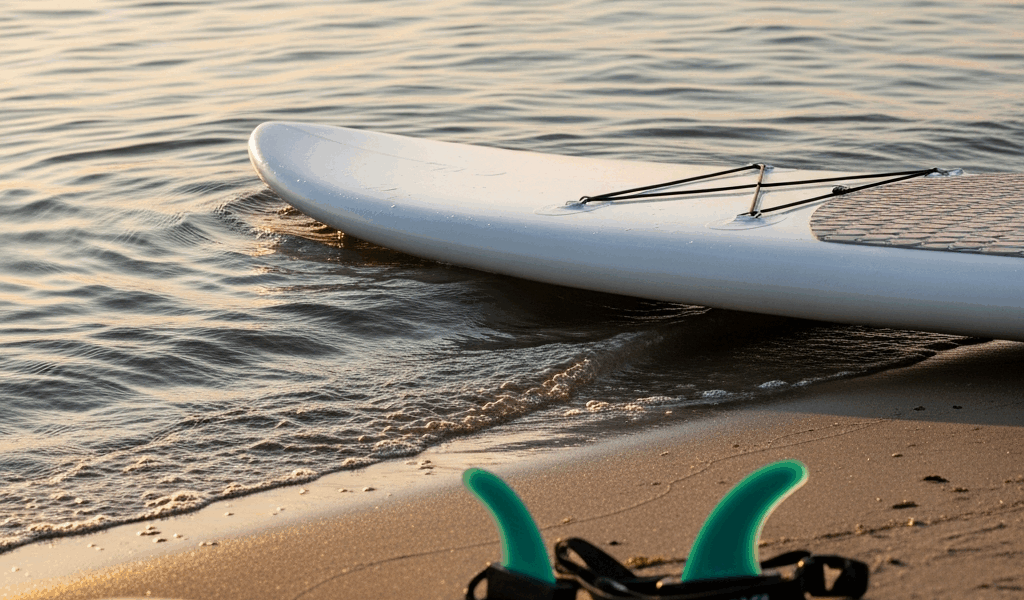
Your SUP board’s nose diving underwater at launch is called pearling, and I’ve watched it happen to nearly every beginner I’ve paddled with—including myself, embarrassingly, my first time out with a 10’6″ inflatable I borrowed from a friend named Marcus. The board’s tip submerges while the rest floats, usually flipping you backward or sideways into the water before you’ve even made it twenty feet.
Here’s the thing though: pearling isn’t some mysterious board defect. It’s just physics. Simple physics.
Two things cause it, and both are fixable. Your weight ends up too far forward during that critical launch moment — your feet aren’t positioned right, or you’re leaning into the paddle, or both. At the same time, your paddle enters the water at the wrong angle, pushing down instead of back. These forces combine and redirect water pressure straight at the board’s nose rather than under it.
I learned this the hard way on flat water at a state park in Michigan. Probably should have opened with this section, honestly — I spent two hours frustrated before another paddler showed me my stance was the culprit, not my board or the conditions. Once I shifted my weight back and adjusted my paddle angle, every launch was clean.
The Launch Stance Checklist That Stops Pearling
Before you launch, run through this sequence. Takes 30 seconds. Removes 90% of pearling problems.
- Foot Position: Your feet should sit roughly shoulder-width apart, centered on the board. Not forward. Not staggered. Centered. People place their front foot too close to the nose, which naturally tips your torso forward — I made this mistake constantly.
- Knee Bend: Soft knees matter here. Bend them 10–15 degrees. Locked-out legs transfer every micro-movement to your upper body, destabilizing you right when you need stability most. I used to stand rigid, thinking it helped. It didn’t.
- Shoulder Angle: Keep your shoulders parallel to the board’s centerline. Don’t rotate toward your paddle side yet — that comes after. Your shoulders should track straight ahead until you’re actually paddling. The mistake here? Turning your torso to “get more power” during launch. That rotation happens *after*, not during.
- Weight Distribution: Sink 60% of your weight into your hips and rear foot, 40% into the front. Not your toes — your weight distributes from your heel backward. Imagine pressing your rear foot into the board. This simple shift prevents nose-dive instantly.
- Paddle Grip Position: Hold the paddle shaft about 18–20 inches from the blade. Too narrow and you’re forced forward. Too wide and you lose power and control. Most retailers like NRS and Aqua Bound include sizing guides in their catalogs — check yours before you buy.
Run this checklist every single launch until it becomes automatic.
Paddle Angle and Entry Timing Fix
Your paddle’s angle at water entry controls where force directs. Get this wrong and you’re actively pushing your nose down.
The paddle should enter the water at 75–80 degrees from horizontal. That’s close to vertical, but not quite. Plant it straight down like you’re hammering a nail, and the blade pushes water down and back, directing energy into the board’s nose. You want the blade angled slightly forward instead — so water flows beneath you.
Timing compounds the problem though. Plant the paddle before your weight fully shifts back, and the blade catches at the moment your center of gravity is still forward. The board can’t lift. Wait until you’re settled, and the board has already started its acceleration without that downward force fighting it.
The sequence matters: feet positioned, weight back, *then* paddle plants. Not simultaneously.
Board speed factors in too. A faster board — meaning more force applied through your paddle — makes angle misalignment worse. You’re launching a 9’8″ racing board versus a 12′ beginner board? The 9’8″ forgives less sloppiness. The 12-footer’s extra volume gives you margin for error that you actually need.
The 75–80 degree range works for flat water and small shore breaks. In bigger waves you’ll adjust, but for standard conditions, stay in that zone.
Board Setup Culprits You Might Overlook
Technique alone doesn’t solve pearling if your board is poorly matched to your body and local conditions.
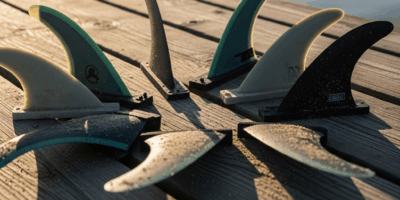
Fin Configuration: A single straight fin is stable but sluggish to launch. Three-fin setups (thruster configuration) distribute water flow differently and can make nose response sharper. Switch boards and the fin setup changes how your launch feels entirely. I once blamed my technique after borrowing a 10′ all-rounder with side fins instead of my usual center-single setup — the board launched completely differently. Fins matter more than people realize.
Volume and Weight Matching: Your board needs enough volume to float you at rest with minimal freeboard (the distance from water to deck). A 200-pound person on a 9′ board with 110 liters of volume is undervolume — the board sits lower, and nose-diving becomes more likely. Same person on a 12′ board with 180 liters? Sits higher. Check your board’s volume (printed near the serial number) against your weight. You want 40–50 liters of volume per 100 pounds of body weight, minimum. That’s your baseline.
Inflation Pressure: Under-inflated boards sit heavier in the water, increasing pearling risk on inflatables. A 12′ inflatable needs 12–15 PSI (pounds per square inch). Many people pump them to 10 PSI thinking it’s gentler. It’s not — it’s slower and nose-heavy. Use a quality pump with a pressure gauge. The ones sold at big-box stores often read low by 2–3 PSI. I switched to a SUP-specific pump from a brand like Tower or Aqua Marina (around $35–50), and pressure consistency improved immediately.
Board Length and Type: Shorter boards (under 9’6″) respond faster but reward precision. Longer boards (11’–12’6″) forgive sloppy launches because volume spreads across more surface area. Pearling constantly? Move to a longer board temporarily while you nail technique. Then go shorter if you want.
Conditions That Amplify Pearling Risk
Some conditions make perfect technique harder, no matter what you do.
Shore Break Type: Launching from a beach with steep drop-offs is harder than launching from a gradual slope. The steep launch means water pressure changes rapidly as the board leaves shore, and your weight distribution matters more. Flat shorelines are more forgiving. Always launching from a steep beach? Expect to work harder on weight positioning.
Water Temperature: Cold water feels heavier, which messes with your balance perception. Your body tenses up, legs lock, and suddenly you’re leaning forward without realizing it. At 45°F versus 75°F, your proprioception (body awareness) shifts entirely. Dress appropriately and practice weight distribution deliberately in cold water — don’t rely on instinct.
Wind Direction: Headwind pushes the board’s nose down slightly as you launch. Tailwind does the opposite. Launching into a strong headwind makes pearling more likely unless you account for it. I’ve paddled the same board in the same spot with zero issues on calm days, then pearled repeatedly when wind picked up. It’s real.
Swell and Texture: Launching through small shore break (1–2 foot waves) adds a timing variable. A wave hits you during launch and your weight distribution gets thrown off. Flat water is your training ground. Master it there first.
Put all this together. Center your feet. Shift weight back. Angle the paddle correctly. Match your board’s volume to your weight. Launch on flat water in calm wind. The pearl vanishes.

Stay in the loop
Get the latest sup spots updates delivered to your inbox.