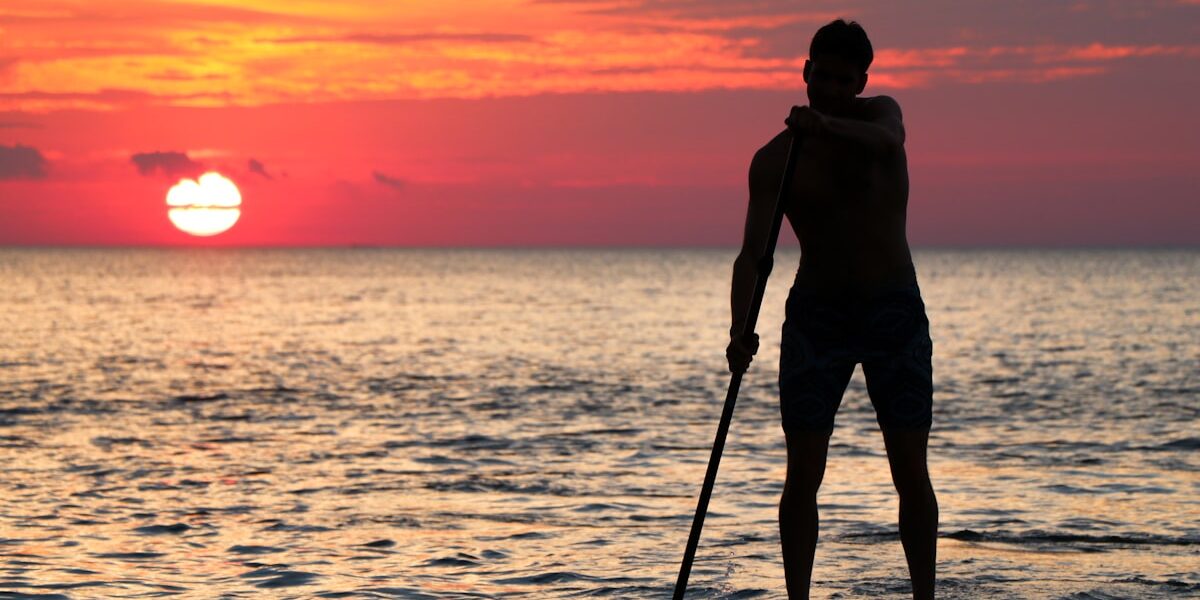
The best uncrowded paddleboarding spot is not a “secret” pin copied from a list. It is a legal access point and route that match your skills, current conditions, equipment, and rescue plan. A quiet site can carry more risk than a popular one because help, weather information, parking, communication, and alternate landings may be limited.
Use this process to find lower-traffic water without trespassing, exposing sensitive habitat, or mistaking remoteness for safety.
Start With Official Access Sources
Search websites and maps maintained by parks, public-land agencies, harbors, water-trail managers, state boating offices, and local governments. These sources are more useful than an old travel article because they can publish current closures, hours, fees, permits, launch rules, water quality, wildfire restrictions, and seasonal wildlife protections.
Confirm that paddleboards are permitted at the exact access point and on the planned water. Public water does not guarantee public shoreline access. Never cross private property, climb a closed gate, block an emergency route, or improvise a launch from an unstable bank.
Search One Level Beyond Famous Destinations
Instead of searching for “hidden SUP spots,” try:
- Official water trails and paddling routes
- Municipal or county parks with legal nonmotorized launches
- Managed reservoirs with designated recreation zones
- State park boating and paddlesports pages
- Harbor or estuary maps showing launch and navigation areas
- Local paddling clubs and qualified outfitters with current venue knowledge
Use satellite images only as a planning aid. An apparent shoreline opening may be private, closed, environmentally sensitive, steep, muddy, or inaccessible at the current water level.
Visit at a Lower-Traffic Time, Not a Riskier Time
Weekdays and shoulder seasons may be quieter, but darkness, cold water, limited staffing, winter closures, or unstable weather can remove the safety margin. An early start is useful only if the site is open, visibility is adequate, and the forecast supports the complete trip.
Do not paddle at night or in fog simply to avoid crowds. Do not enter closed water or launch during dangerous conditions because the parking lot is empty.
Screen the Water Before Driving
Check the National Weather Service forecast and any marine, beach, river, flood, air-quality, or water-quality advisories. Look at wind direction and gusts, thunderstorms, visibility, water temperature, current, tide, waves, river level, daylight, and recent rainfall.
For controlled first sessions, use the beginner paddleboarding location scorecard. Remote sites should require a larger—not smaller—safety margin.
Evaluate Access and Rescue
Before launching, identify:
- A safe primary launch and landing
- At least one legal alternate landing
- A short route that remains close to usable shore
- Known hazards such as dams, strainers, surf, tidal flow, boat channels, rocks, or submerged structure
- Where communication works and how rescuers could reach the site
- The exact location information to give emergency services
If a route depends on one tiny landing, unreliable phone service, a long exposed crossing, or equipment you have not practiced using, it is not a casual uncrowded alternative.
Ask Better Local Questions
A reputable outfitter, ranger, harbor office, or paddling group may know whether a site is suitable today. Ask about current access, water level, wind exposure, traffic, hazards, wildlife closures, legal parking, launch surface, and alternate landings. “Is it a good spot?” is too vague.
Local advice does not replace your decision. Conditions can change after the conversation, and another paddler’s experience or risk tolerance may differ from yours.
Protect Quiet Places
Low-traffic water often remains pleasant because visitors reduce their impact. Follow posted rules, use durable legal access, pack out all waste and fishing line, clean and dry equipment to limit invasive species, avoid disturbing wildlife, and keep noise low.
Do not publish precise locations of sensitive nesting, spawning, cultural, or restoration areas. Never approach, feed, touch, surround, or chase wildlife for a photograph. If an animal changes behavior because of you, increase distance.
Keep the Safety System Complete
Wear an appropriate life jacket, use a leash system selected for the environment, carry a whistle and protected communication, dress for immersion, and leave a float plan. The float plan should include launch, route, alternate landing, board description, paddlers, vehicle, equipment, expected return, and what to do if overdue.
Solo paddling in an isolated area adds consequences. A capable partner or qualified group can improve the plan, but everyone still needs the equipment and skills to fall, remount, stop, turn, and return.
Uncrowded Location Checklist
- Access and SUP use confirmed on an official current source
- No closure, permit, parking, private-property, or habitat conflict
- Weather and water within conservative limits
- Primary and alternate landings are legal and usable
- Route avoids exposed crossings, traffic, current, and known hazards
- Communication and emergency location information are ready
- Life jacket, environment-specific leash, clothing, and rescue skills match the water
- Float plan left with a responsible person
If the site fails a critical check, choose a managed, more visible venue. A slightly busier safe launch is better than solitude with no workable exit.
Official Planning Reference
Use the National Park Service Trip Planning Guide as a general framework for permits, weather, trip plans, backup options, and emergency preparation.
Traveling farther for quiet water adds access, weather, rescue, and environmental questions. Use the tropical SUP trip-planning checklist before choosing an operator or route.


Stay in the loop
Get the latest sup spots updates delivered to your inbox.