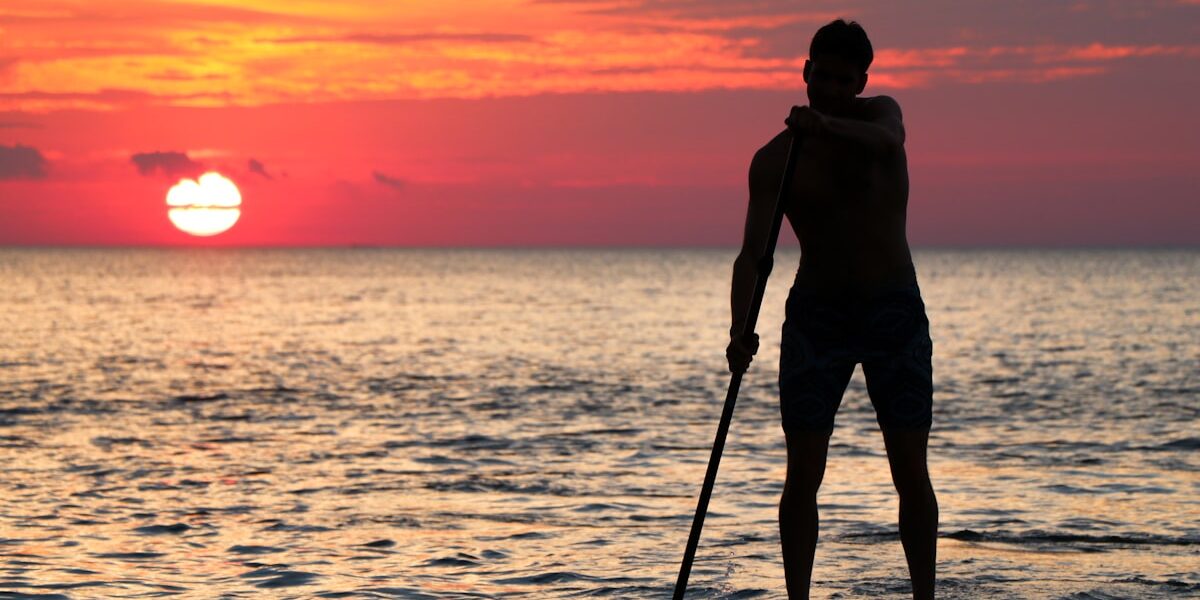
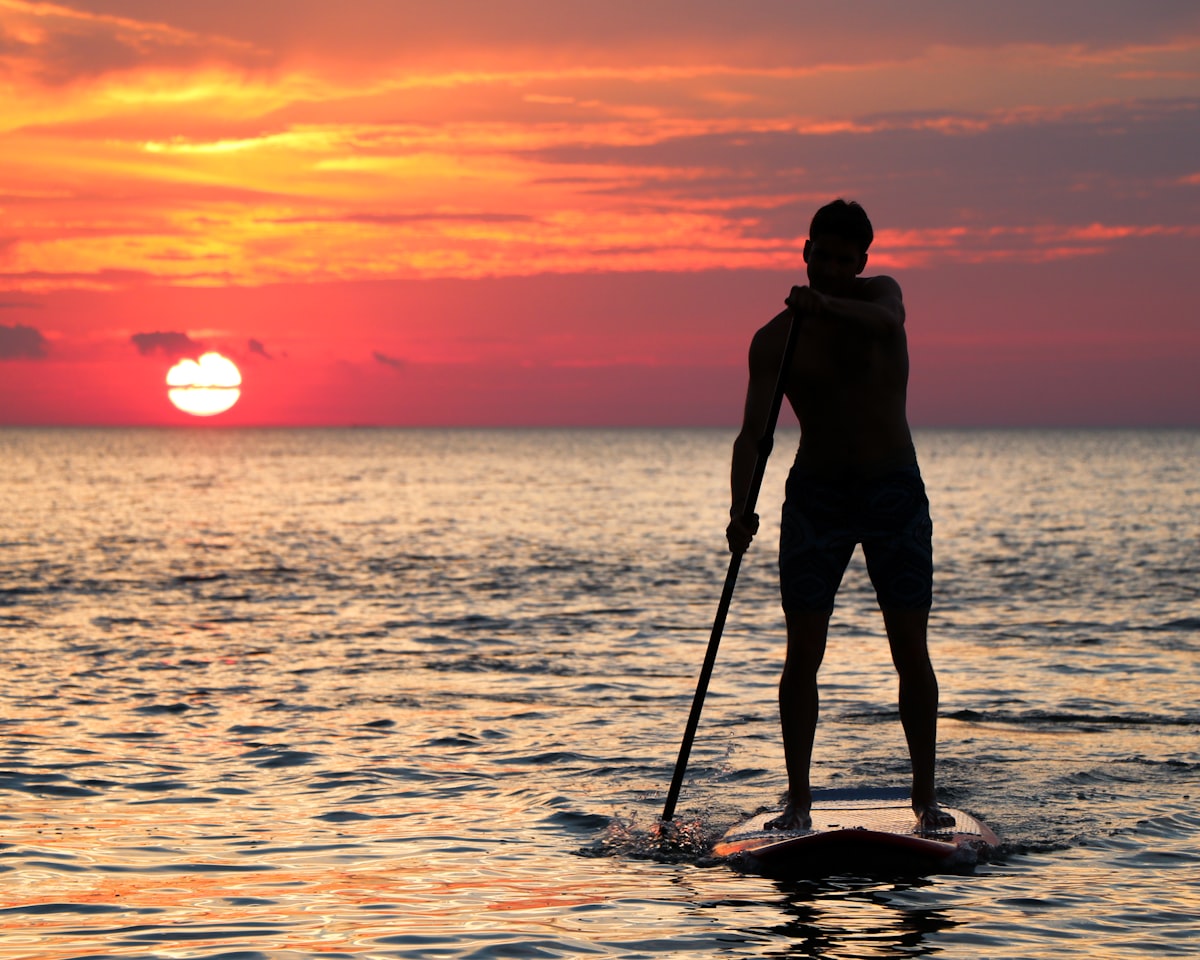
Racing changed how I paddle. What started as friendly competition at a local event became training schedules, technique refinement, and a community of paddlers who push each other to improve. The competitive element adds structure and motivation that recreational paddling sometimes lacks.
SUP racing exists across a spectrum from casual club time trials to professional world tours. Finding your place on that spectrum starts with understanding what racing involves and whether the competitive element appeals to you.
Racing Disciplines Explained
Sprint racing covers short distances fast. Most sprints run 200 to 400 meters, finishing in under two minutes of maximum effort. These events demand explosive starts, sustained high stroke rates, and anaerobic fitness. The intensity feels like running a 400-meter track race. Controlled venue conditions eliminate environmental variables, making sprints pure tests of paddler speed.
Distance racing shifts the challenge toward endurance. Courses range from 5 kilometers to marathon-length events exceeding 20 miles. Pacing strategy becomes critical since starting too fast guarantees suffering later. Nutrition, hydration, and mental toughness join physical fitness as success factors.
Technical racing combines speed with agility. Courses include buoy turns, beach runs, and obstacle navigation that test board handling alongside paddling power. The ability to maintain composure through chaotic race situations often determines finishing positions more than pure speed.
Ocean racing represents the ultimate test of skill and equipment. Downwind events harness ocean swells for thrilling high-speed runs. Coastal races navigate changing conditions across multi-mile courses. Open water experience and specialized equipment become essential for ocean racing success.
Race Board Characteristics
Race boards prioritize speed over stability. Widths typically fall between 21 and 28 inches, dramatically narrower than recreational shapes. This narrow profile cuts water resistance but demands excellent balance and refined technique. The learning curve is steep but the speed payoff is substantial.
Length regulations vary by racing class. Fourteen-foot boards dominate many categories, though some events allow unlimited length. Longer boards glide better between strokes, maintaining momentum more efficiently. Racing construction uses lightweight materials like carbon fiber to minimize weight while maximizing rigidity.
Hull designs for racing feature aggressive displacement shapes that slice through water. The pointed bow and minimal rocker create boards that track exceptionally well but require commitment to balance. Race boards tolerate no technique sloppiness.
Volume must match paddler weight precisely. Insufficient volume leaves the board sitting too low, creating drag. Excessive volume wastes the potential speed of the design. Most manufacturers provide detailed sizing guidance based on paddler weight and skill level.
Training Structure for Racing
Base fitness provides the foundation. Long, moderate-intensity paddles of 60 to 90 minutes build aerobic capacity and endurance. These sessions develop the cardiovascular system and teach efficient technique over extended effort. Most training programs include significant base work before adding intensity.
Interval training develops race-specific speed. Structured workouts alternate high-intensity paddling with recovery periods. Common formats include 30-second sprints with 30-second rest, or longer 3 to 5 minute efforts at race pace. These sessions hurt but create measurable speed improvements.
Strength training supports paddling power and prevents injury. Core stability work translates directly to stroke efficiency. Rotational exercises mimic the twisting motion of paddling. Upper body pulling exercises build the muscles that drive each stroke.
Race-specific practice includes starts, turns, and transitions. Buoy turns cost significant time when executed poorly. Beach starts and finishes require coordinated dismounts and mounts. Practicing these technical elements ensures they become automatic during competition.
Technique for Speed
Efficient technique determines race performance more than raw strength. The power phase begins with a clean catch, blade entering water near the board’s nose. Core engagement and torso rotation drive the pull rather than arm muscles alone. This technique protects shoulders while generating maximum power.
Stroke rate matters. Elite racers typically maintain 50 to 70 strokes per minute during competition. Finding your optimal rate requires training experiments. Too slow wastes potential speed. Too fast creates inefficient, shallow strokes that tire you quickly.
Clean exits save energy. The blade should leave the water before reaching your feet. Continuing the pull past this point creates drag and wastes effort. Each stroke should transition smoothly into the next without pause or splash.
Straight tracking reduces correction strokes. Every correction costs forward momentum. Developing a symmetric, balanced stroke that naturally propels the board straight saves energy over race distances. This skill develops through mindful practice and often video analysis.
Finding Races and Community
Local paddling clubs provide the easiest entry into racing. Many host informal time trials and friendly competitions that introduce racing concepts without intimidating atmosphere. Club members share information about upcoming events and often travel together to races.
National and regional racing organizations maintain event calendars. Organizations like the Paddle League and regional associations coordinate racing series throughout the paddling season. Their websites list events, registration details, and results from previous races.
Paddle sports retailers often connect paddlers with local racing communities. Staff frequently participate in events and can point newcomers toward appropriate entry-level races. Many shops sponsor local teams or events.
Social media groups dedicated to SUP racing share event information and training discussions. Regional racing communities maintain active online presence where paddlers coordinate training sessions and share transportation to events.
Competition Categories
Age group divisions ensure competitive racing across life stages. Youth, open, masters, and senior categories allow paddlers to compete against others at similar ages. These divisions ensure competitive racing regardless of when you start.
Skill-based divisions separate elite athletes from recreational racers. Open or elite categories attract professional and serious amateur competitors. Recreational and age group divisions provide welcoming competition for developing paddlers.
Board class divisions categorize equipment for fair competition. Fourteen-foot race boards, 12-foot 6-inch boards, and unlimited classes are common. Some events include inflatable board categories to encourage broad participation.
Starting Your Racing Journey
Begin with local, low-pressure events. Fun races, charity events, and club competitions emphasize participation over competition. Focus on finishing and learning rather than placement in your first races. Every experienced racer started as a nervous beginner.
Demo or rent race equipment before buying. Many events offer board demos where you can try different shapes. Racing boards represent significant investment, so understanding what works for you prevents expensive mistakes.
Connect with experienced racers who remember being new. The racing community generally welcomes newcomers enthusiastically. Ask questions about training, equipment, and race tactics. Most racers enjoy sharing what they’ve learned.
Set realistic first-season goals focused on personal improvement rather than podium finishes. Track your progress through improved times and better technique. The satisfaction of measurable improvement motivates continued development regardless of finishing position.
Racing rewards paddlers who enjoy competition, structured training, and continuous improvement. The community aspect adds social dimension beyond solo paddling. Whether you pursue casual club racing or elite competition, the racing path offers clear progression and achievable goals for motivated paddlers.



Stay in the loop
Get the latest sup spots updates delivered to your inbox.