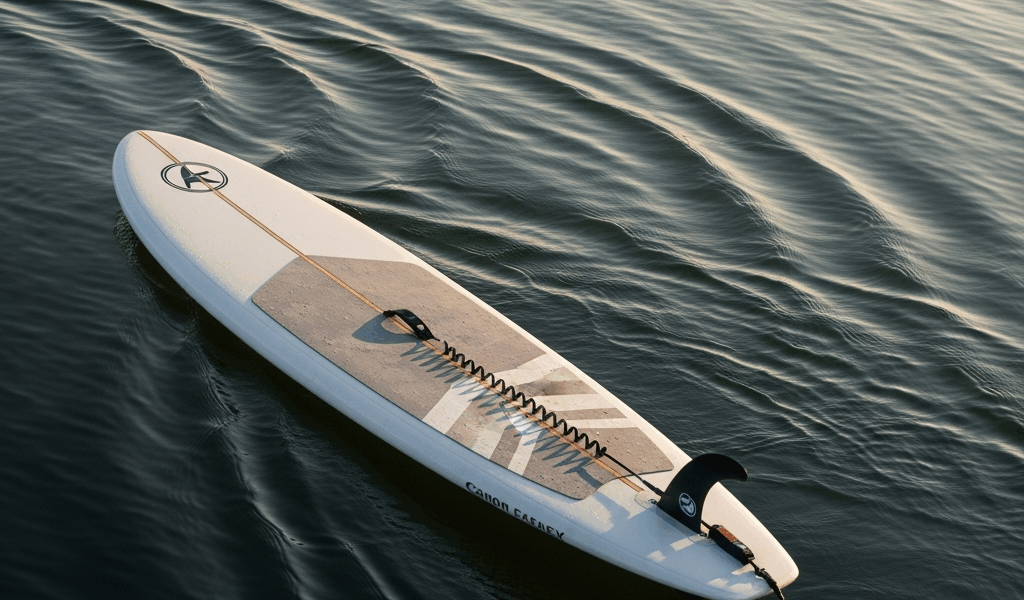
What Wind Actually Does to a SUP Board
SUP paddling in wind has gotten complicated with all the conflicting advice flying around. As someone who’s spent years getting humbled on open water, I learned everything there is to know about why boards behave like shopping carts with broken wheels the moment a breeze kicks up. Today, I will share it all with you.
But what is wind drift, exactly? In essence, it’s physics pushing against everything above the waterline — your deck, your legs, your torso, your paddle. But it’s much more than that. It’s a compounding problem that most people misdiagnose completely.
Wider boards catch more wind. Longer boards catch more wind. A 12-foot all-around cruiser in 15-knot crosswinds behaves nothing like a 9-foot touring board — but both will drift sideways if you’re not actively managing it. The wind doesn’t care how much you spent.
Here’s what most people miss. This isn’t purely a weather problem. Strong wind makes everything harder, sure. But the sideways pressure you’re fighting usually comes down to three fixable things — your stance, your fin, and your paddle technique. Board shape matters too, but that’s last-resort territory.
Your Stance Is Making the Wind Problem Worse
Frustrated by a full session of fighting her board on Lake Michigan like it had a personal grudge, a coach friend of mine watched a paddler struggle for two minutes and said, “Your butt’s too far back.” That was it. Two minutes.
I’ve repeated that same diagnosis probably a hundred times since. Standing too far toward the tail lifts your nose and turns the front of your board into an unintentional sail. Wind catches that lifted nose and spins you sideways — or pushes the whole board off line. The farther back you stand, the worse it gets. Your weight distribution actually shifts the board’s pivot point, which changes how wind pressure acts on it.
Probably should have opened with this section, honestly. It fixes the problem for most people who think they have a wind problem when they actually have a stance problem.
Here’s the fix. Stop worrying about where your feet feel comfortable and start worrying about where they actually work.
- Stand with feet parallel and hip-width apart, centered directly over the handle
- Keep weight evenly distributed — not favoring heels or toes
- Lean slightly forward into the wind, just a few degrees
- Keep knees soft so you can absorb chop and movement
That forward lean matters more than you’d think. It drops your center of gravity and shrinks the frontal surface area wind can grab. Small adjustment. Big difference.
If you’re standing too far back because the front of your board feels genuinely unstable, that’s a separate issue — usually a board volume mismatch. But if you’re centering yourself properly and wind is still pushing you around, move to the next diagnosis.
Your Fin Setup Is Not Matched to Windy Conditions
A small fin or a worn-down fin loses tracking fast. Tracking is the board’s ability to hold a straight line. Without it, wind pushes the tail sideways and you lose directional control — completely, not partially.
Most all-around boards ship with a single 7-inch or 8-inch fin. Fine for flat days. In crosswind? A fin that size often can’t hold the tail. You’ll feel the back third of your board washing out sideways no matter how hard you stroke.
Three-fin thruster setups — one center fin plus two side bites — give you more lateral hold in windy conditions. The side fins act as anchors underwater. If your board has an interchangeable fin system and you own both configurations, switch to the thruster when wind picks up. You’ll notice the difference on the first stroke.
I’m apparently the kind of person who spends 20 minutes troubleshooting wind drift only to discover my fin box screw had loosened a quarter-turn from the previous session, and a FCS II box works for me while a loose Futures setup never does. Don’t make my mistake. Pull your fin out, clear any sand or debris from the base, slide it back in firmly, and crank the screw hand-tight plus one-quarter turn. Not more. Overtightening cracks the base — a $15 screw mistake that costs a $60 fin.
While you won’t need a completely different board to solve fin problems, you will need a handful of simple tools — a fin key, a few minutes before launch, and a second fin option if your board supports it. That’s the whole list.
How to Adjust Your Paddle Stroke for Wind Drift
So, without further ado, let’s dive into technique — because even with good stance and a properly seated fin, wind drift is manageable with intentional stroking. Most paddlers make it worse by paddling only one side or by using a flat, horizontal blade angle.
A flat stroke kills your directional control. You need a vertical stroke — wrist straight, shaft close to your body, blade entering and exiting with intention. That vertical angle gives you actual leverage to hold your line against lateral pressure.
The J-stroke might be the best option here, as crosswind paddling requires constant heading correction. That is because every stroke on the upwind side slightly accelerates your drift if you’re not countering it. The J-stroke does the correcting inside your normal power phase — no extra stroke needed.
- Drive through the stroke normally, blade vertical alongside the board
- At the end of the power phase, rotate your wrist so the blade faces outward
- Sweep the blade away from the board toward the tail — maybe 8 to 10 inches of sweep
- The outward angle pushes water in a way that corrects your heading mid-stroke
Don’t paddle only one side in wind. That spirals the problem fast. Alternate sides every few strokes — in strong crosswind, you might do three strokes on the downwind side and two on the upwind side, then repeat. Adjust the ratio based on how hard the wind is actually pushing you. This isn’t a formula. It’s feel.
When the Board Shape Is the Real Problem
Some board shapes are genuinely worse in wind. That’s what makes wide all-around boards endearing to us beginners on calm days — and genuinely miserable in a 20-knot headwind.
Wide all-around boards — 28 to 32 inches across — offer more surface area for wind to grab. Flat rockers don’t cut wind the way a curved nose-to-tail profile does. Large, squared-off tails catch more pressure. A 12-foot by 32-inch flat-bottomed cruiser with a wide pintail is going to fight you in wind every single time. Compare that to a 10-foot by 28-inch touring shape with rocker and a narrower pulled-in tail. Different experience entirely.
First, you should exhaust every stance, fin, and stroke fix first — at least if you want to avoid spending $900 on a new board only to realize the problem was your back foot. This new approach to board selection took off several years later in the touring market and eventually evolved into the narrower, rocker-forward shapes enthusiasts know and reach for today when conditions get serious.
If you’re consistently paddling in wind and your board makes it genuinely miserable after all adjustments, a different board is a legitimate answer. Look for curved rocker, a tail width under 14 inches, and an overall width around 26 to 28 inches. But exhaust the free fixes first. You’d be surprised how far proper stance and a clean fin box get you.

Stay in the loop
Get the latest sup spots updates delivered to your inbox.