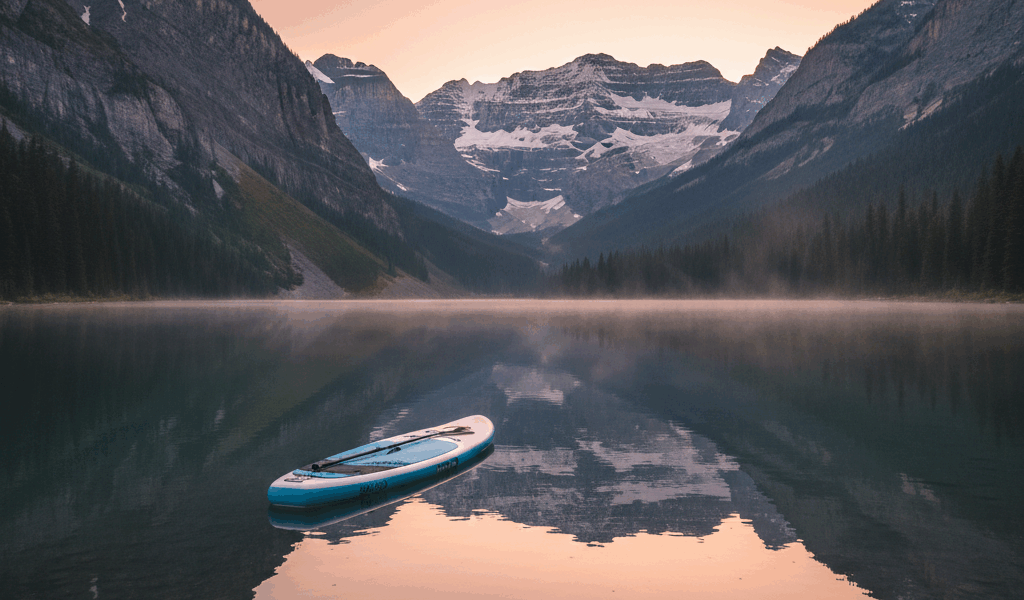
Lake paddleboarding has more noise than signal these days. As someone who started on the ocean, got beaten up by waves for months, and then discovered that lakes are where paddleboarding actually makes sense for most people, I figured out most of what you need to know.
I got my first paddleboard five years ago and immediately took it to the ocean. Waves knocked me off repeatedly, currents pushed me where I didn’t want to go, and I came home bruised and frustrated. The next weekend, I tried a lake instead. Everything changed.
Lakes are where paddleboarding makes sense for most people, most of the time.
Why Lakes Work Better
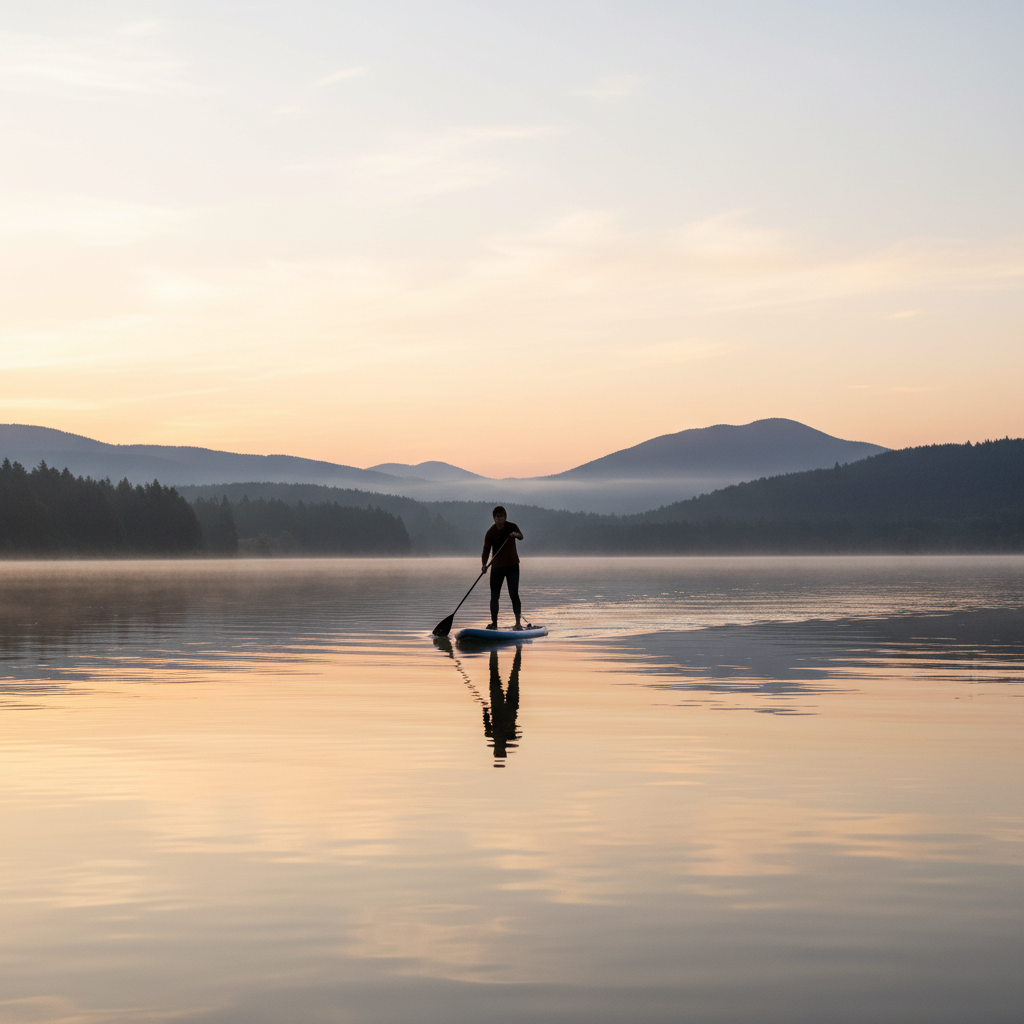
The obvious thing is flat water. No waves to knock you around, no swell to time. You can actually relax on a lake, which turns out to be the whole point of recreational paddling.
But it’s more than just calm conditions. Lakes offer variety—quiet coves to explore, islands to circumnavigate, shorelines that change with every bend. The ocean gives you open horizon; lakes give you landscape.
Wildlife shows up differently too. Herons in the shallows. Bass jumping. Turtles sunning on logs. You paddle quietly enough on a lake that animals don’t scatter the way they do when you’re crashing through surf.
Finding the Right Lake
Not all lakes are equal for paddleboarding. Small lakes get crowded with powerboats on weekends. Large lakes can develop wind waves that rival ocean chop. Finding the sweet spot takes some exploration.
My favorite lakes for paddling share a few characteristics. They’re big enough to spend hours exploring but small enough that powerboat traffic stays manageable. They have irregular shorelines—bays, inlets, islands—that reward curiosity. And they’re accessible without a long drive.
State parks often protect excellent paddling lakes. Limited development means cleaner water and less noise. Some restrict motorized boats entirely, which makes the whole experience more peaceful.
Morning vs Evening — Timing Matters More Than You Think
Probably should have led with this section, honestly — because when you paddle matters almost as much as where.
Timing matters more on lakes than I expected. Early morning—really early, like sunrise—gives you glass-smooth water before the wind picks up. The lake reflects the sky and the trees, and you’re paddling through what feels like a mirror.
By mid-morning, thermal winds start. Not dangerous, usually, but enough chop to make balancing more work. By afternoon, some lakes get genuinely rough, especially if they’re oriented to catch prevailing winds.
Evening can be magic again. The wind dies as the sun drops, and you get that glass-water effect returning. I’ve had evening paddles where the only sound was my paddle entering the water and the occasional splash of a fish.
What to Bring
Lake paddling invites lingering. I bring a dry bag with snacks, water, sunscreen, and often a book. Some of my best afternoons involve paddling to a quiet cove, anchoring the board, and reading for an hour before paddling back.
A simple anchor helps—just a mushroom anchor on a rope long enough to reach bottom. Drop it in five or six feet of water and you can hang out without drifting.
Bug spray matters depending on the lake and season. Those quiet coves that look so appealing can be mosquito factories in the wrong conditions. I’ve learned to scout from a distance before committing.
Skills That Develop
Lake paddling teaches different skills than ocean or river work. Efficiency matters more because you can cover real distance. I’ve done twelve-mile paddles on lakes, which demands a sustainable stroke and reasonable pacing.
Navigation matters on bigger lakes where the shoreline looks similar for miles. I learned to identify landmarks, note my position relative to launch points, and pay attention to wind direction for the return trip.
Balance improves gradually. My first year, I fell in regularly. Now I can paddle through boat wakes without thinking about it. The progression happened through hours of lake time that would have been miserable in the ocean.
A Different Relationship
Lake paddling has become something more than exercise for me. It’s meditation of a sort—the rhythm of the stroke, the quiet of early morning, the gradual exploration of a new piece of water.
I still paddle the ocean occasionally, but I always come back to the lakes. Less drama, more peace. Exactly what I wanted from paddleboarding in the first place, even if it took me a while to figure that out.


Stay in the loop
Get the latest sup spots updates delivered to your inbox.