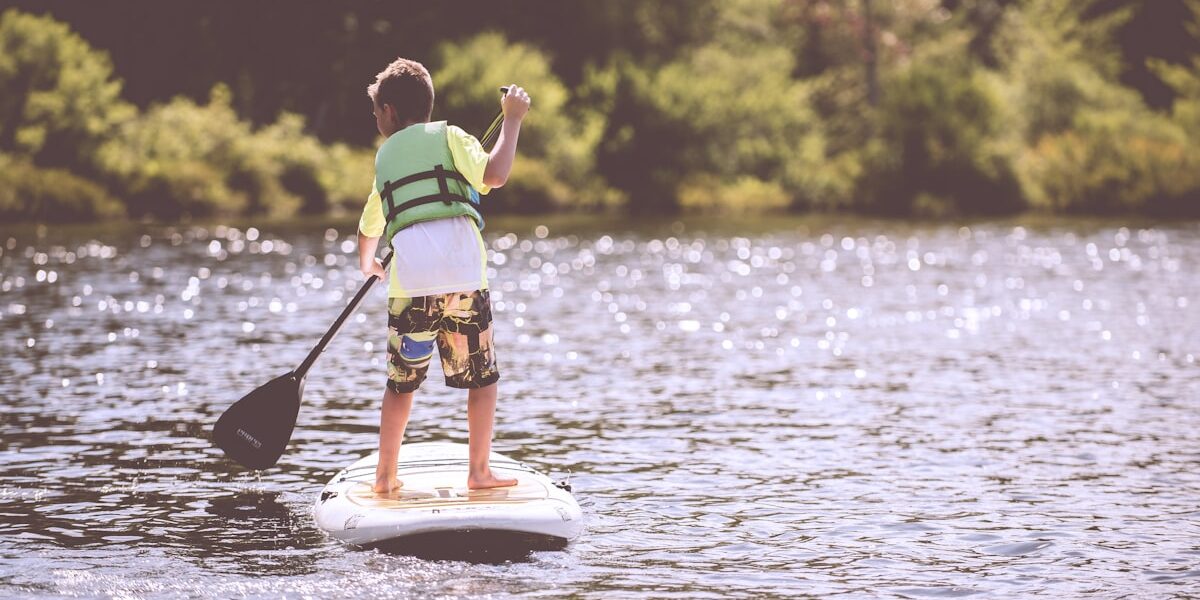
My daughter was five when she first sat on the front of my paddleboard. We barely made it fifty feet before she demanded to try standing. That moment changed our family outings forever.
Paddleboarding with kids requires different thinking than solo sessions. The gear choices matter more, safety becomes paramount, and patience becomes your most important piece of equipment. But when it works, nothing beats exploring a quiet cove with your kid pointing at fish below the board.
Finding the Right Board for Family Paddling
Most standard boards work fine when kids are passengers, but stability becomes crucial. I learned this the hard way when my 10-foot recreational board felt tippy with a squirming six-year-old shifting weight randomly.
Wider boards in the 32 to 34 inch range give kids room to move without capsizing everything. All-around shapes handle the varied conditions of family outings, from calm morning paddles to afternoon sessions when the wind picks up. Volume matters too, since you’re essentially carrying double your normal weight.
Inflatable boards have become my default for family paddles. The soft surface forgives falls better than hard fiberglass. My son has bonked his chin on the deck pad more times than I can count. The softer landing meant tears dried faster and we kept paddling.
Safety Gear That Actually Gets Worn
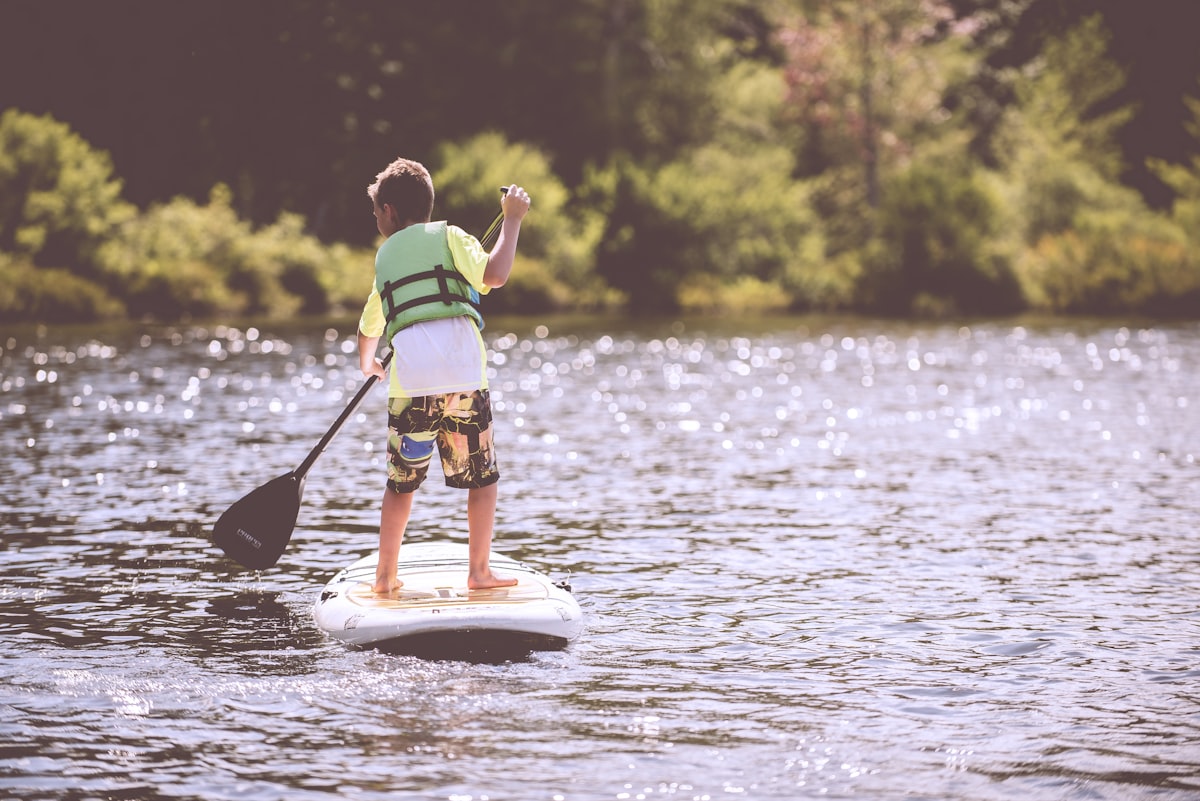
Kids will fight uncomfortable PFDs. I’ve watched my neighbor spend twenty minutes wrestling her daughter into a bulky life jacket, only to have the child refuse to get on the board. Finding properly fitted, kid-specific PFDs makes the difference between paddling and parking lot arguments.
Coast Guard approved Type III vests designed for children fit snugly without restricting movement. The fit test is simple. If you can lift the vest over your child’s chin, it’s too loose. If they can’t raise their arms comfortably, it’s too tight.
Leashes present a decision point. When kids ride with me, I wear the leash since I need to stay with the board to rescue anyone who falls. When my older kids paddle solo, they wear their own ankle leashes. The board becomes their primary flotation device, so keeping it close matters.
Sun protection runs beyond what most parents initially pack. Rash guards block UV while preventing deck pad friction burns. Wide-brimmed hats with chin straps stay on during falls. Sunglasses with retention straps protect eyes from water glare. We’ve had paddles ruined by sunburn, so now I pack like we’re heading to the Sahara.
Matching Expectations to Age
Four and five year olds make wonderful passengers and terrible crew members. They sit on the board, watch fish, and provide running commentary on everything they see. Expecting them to paddle productively leads to frustration for everyone. Let them hold a paddle. Let them splash. Focus on exposing them to the water rather than covering distance.
By six or seven, kneeling and paddling becomes possible with the right equipment. Youth paddles sized for smaller bodies make actual propulsion achievable. These shorter, lighter paddles reduce fatigue and let kids develop real technique. My daughter’s strokes look better than mine did after a year of paddling because she started with properly sized gear.
Around ten to twelve, independent paddling on calm water becomes reasonable with close supervision. Smaller boards designed for lighter weights give kids responsive feedback that adult boards can’t provide. They develop balance and confidence faster on equipment that matches their size.
The Teaching Progression That Works
Every lesson starts on the lawn. Seriously. We practice paddle grip, stance, and stroke motion standing on grass before anyone touches water. This builds muscle memory without the distraction of balancing. Kids can focus on technique without worrying about falling.
First water sessions happen on knees in shallow water where everyone can touch bottom. The lower center of gravity provides stability while kids learn to coordinate paddle strokes. Staying close to shore means falls result in standing up rather than swimming rescues.
The transition to standing follows the same sequence every time. Hands flat on the board, bring feet to where knees were, push up slowly. Feet stay parallel and shoulder width apart. Eyes look at the horizon rather than down at the board. This sequence becomes automatic with practice, reducing standing anxiety.
Keeping Things Interesting
Paddling for the sake of paddling bores most kids within fifteen minutes. Games and activities transform outings from exercises into adventures.
Treasure hunts with floating objects give paddling purpose. I toss a few foam balls in different directions and let kids race to collect them. The competition creates motivation to paddle efficiently. Scavenger lists work similarly. Spot a heron, find three different colored boats, locate the biggest fish. Purpose drives engagement.
Follow the leader games build skills without kids realizing they’re learning. Lead them through gentle turns, demonstrate kneeling, try backing up. Rotate leaders so everyone practices both following and directing.
Nature exploration appeals to curious kids. Shallow areas reveal underwater life from the board’s elevated vantage point. Bring waterproof field guides and turn paddles into educational expeditions. My son learned more about local wildlife from paddleboard trips than any classroom.
Picking the Right Conditions
Calm water isn’t just preferred for family paddling. It’s required for safe, enjoyable sessions. Early mornings before wind develops provide the best conditions. The water sits flat, reflections perfect, wildlife active. By afternoon, even small lakes develop chop that challenges young paddlers.
Protected bays and small lakes outperform open water for obvious reasons. Less boat traffic, shorter rescue distances, easier navigation. State park lakes with motor restrictions create ideal learning environments without wake interference.
Water temperature deserves more attention than most parents give it. Cold water turns minor falls into serious situations. I save cold water paddling for when kids are strong swimmers and we’re equipped with appropriate exposure protection. Warm summer conditions forgive falls and make getting wet part of the fun rather than a crisis.
Weather watching becomes habit. I check forecasts before leaving home and watch the sky throughout sessions. Developing thunderstorms mean immediate exit. Learning to read approaching weather teaches kids valuable outdoor skills while keeping everyone safe.
Supervision and Boundaries
Clear rules established before launching prevent confusion on the water. Kids know they stay within designated areas, keep PFDs on, and follow instructions immediately. We practice what to do if they fall off and how to get back on. These rehearsals build confidence and ensure everyone knows the plan.
Close supervision means staying within immediate reach of any child paddler. Even confident young paddlers need adult oversight. I position myself where I can reach anyone quickly, usually paddling in the middle of the group.
Fatigue recognition comes with experience. Tired kids make poor decisions and struggle with balance. I end sessions while everyone still feels positive, even if kids want to continue. Building good associations with paddleboarding matters more than maximizing water time.
The investment in proper gear and gradual skill building pays dividends across years of family paddling. Start slow, prioritize safety, and let fun develop naturally as skills grow. My kids now ask to go paddling rather than needing convincing. That transformation took patience but created activities we’ll share for years to come.



Stay in the loop
Get the latest sup spots updates delivered to your inbox.