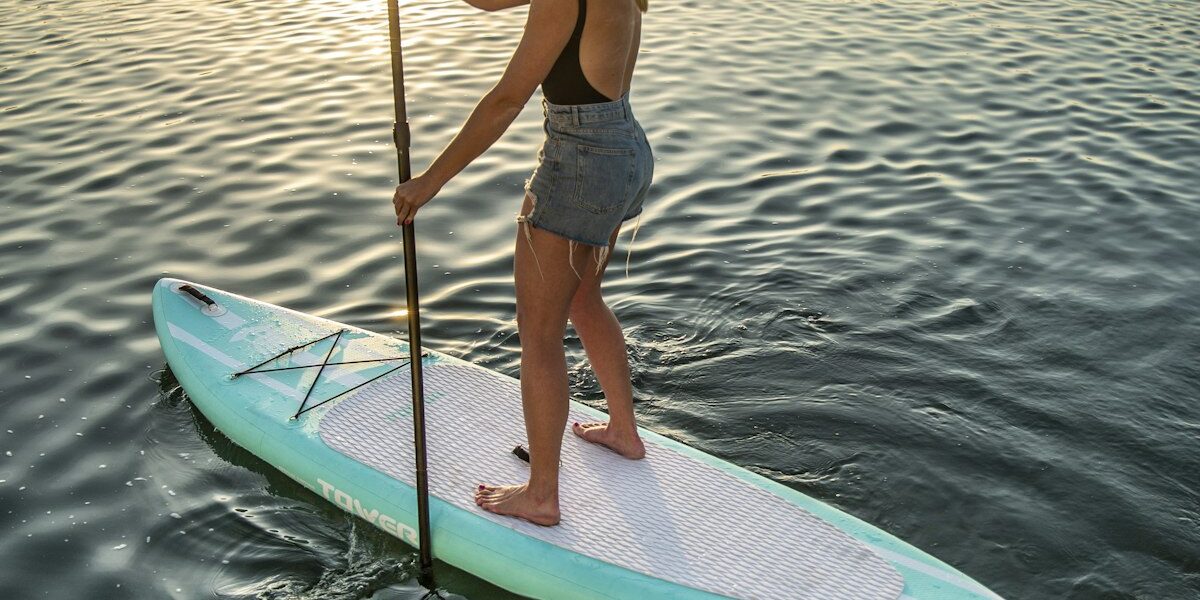
The first time I paddled a touring board, I covered twice my usual distance with less effort. Everything about the experience felt different. The narrow hull sliced through water instead of pushing against it. The displacement bow tracked straight without constant correction. I understood immediately why serious paddlers gravitate toward these specialized designs.
Touring boards exist for paddlers who want to go somewhere rather than just paddle around. They sacrifice maneuverability and initial stability for efficiency and speed. Understanding what makes them different helps you decide if touring fits your paddling goals.
What Makes Touring Boards Different
Length changes everything. Most touring boards run 12 feet 6 inches to 14 feet, sometimes longer. That extra length maintains momentum between strokes better than shorter recreational boards. Each paddle stroke propels you farther before friction slows you down.
The pointed nose looks aggressive because it serves an aggressive purpose. Unlike rounded recreational bows that ride up on water, displacement bows slice through it. This design cuts resistance dramatically at cruising speeds. The trade-off comes in choppy conditions where a displacement hull can feel less stable than a planing hull.
Width typically falls between 28 and 31 inches on touring designs. Narrower than recreational boards, but not as extreme as racing shapes. This compromise between speed and stability works for paddlers with reasonable balance skills who want efficiency without constant swimming.
Hull Shapes and What They Mean
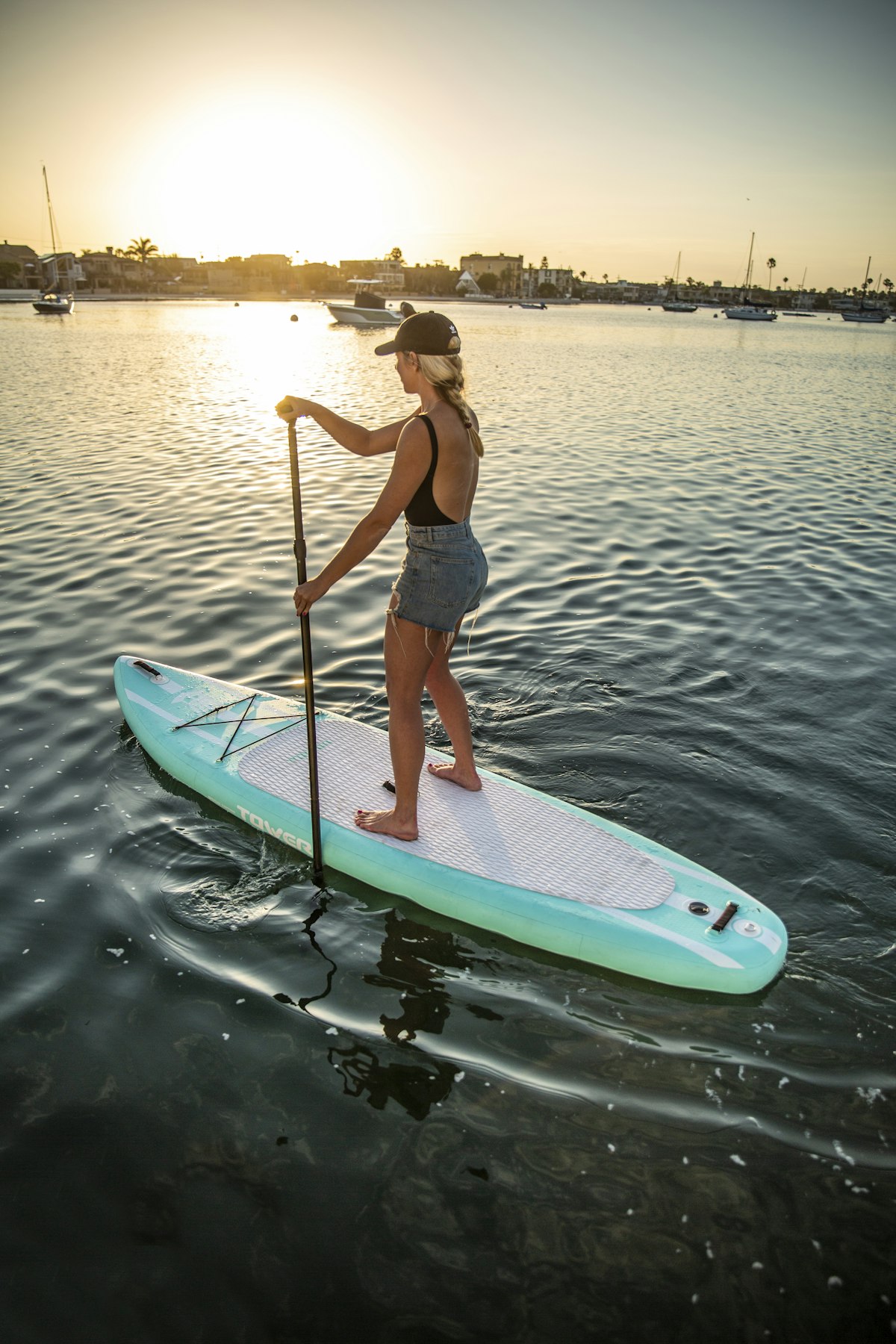
Displacement hulls sit lower in the water with the bow actually submerged slightly. Water flows around the hull rather than beneath it. This creates exceptional tracking and maintained speed but requires commitment to balance. Once moving, displacement hulls want to keep moving in a straight line.
Planing hulls ride on top of the water, the design common on recreational and all-around boards. They offer better initial stability and easier turning but sacrifice efficiency at cruising speeds. Many paddlers find planing hulls more forgiving in learning stages.
Hybrid designs blend characteristics from both hull types. The front portion may feature displacement characteristics while the rear uses planing geometry. These compromise designs suit paddlers who want touring efficiency without fully committing to displacement hull demands.
Carrying Gear for Distance
Real touring means bringing supplies. Boards designed for distance include robust deck rigging for securing dry bags and gear. Front bungee systems hold the essentials within reach. Rear deck areas accommodate larger items for multi-day trips.
Cargo capacity varies significantly between models. Some touring boards handle 400 pounds while maintaining performance. Others sacrifice capacity for speed. Check specifications against your typical load, including your weight plus everything you plan to carry.
Weight distribution affects paddling more than most beginners realize. Heavy items stay low and centered. Lighter gear spreads toward bow and stern. Improper loading creates handling problems that make long distances exhausting rather than enjoyable.
Matching Board to Skill Level
Beginners to touring should start wider. Boards around 31 inches provide stability while introducing touring efficiency. Learning to paddle a narrower board before mastering basic technique creates frustration and limits progress.
Intermediate paddlers can explore narrower options in the 29 to 30 inch range. At this level, the stability trade-off becomes manageable. Day trips and weekend adventures become comfortable on boards that challenge initial skill development.
Advanced touring paddlers often ride boards under 29 inches wide with aggressive displacement hulls. These designs demand refined technique but reward it with exceptional efficiency. The narrowest touring boards border on racing shapes.
Essential Touring Equipment
Paddles matter more for touring than recreational paddling. Carbon or fiberglass shafts reduce fatigue over long distances. The weight difference between entry-level aluminum paddles and quality touring paddles becomes obvious after the first hour. Invest in good paddle technology if distance paddling appeals to you.
Navigation becomes essential once you leave familiar waters. Waterproof chart cases hold paper maps as backup. GPS devices or phone apps with downloaded offline maps provide real-time positioning. A compass requires no batteries and always works.
Safety gear for touring expands beyond flatwater basics. Communication devices reach help when cell service fails. Signaling equipment like mirrors and whistles attract attention. Emergency supplies match the remoteness of your planned routes.
Dry bags protect what water would destroy. Phone, food, first aid kit, extra clothing all stay dry regardless of conditions or capsizes. Pack with worst-case scenarios in mind and you’ll handle whatever the water delivers.
Planning Routes and Managing Risk
Good routes result from homework completed before launching. Study maps for hazards, access points, and bailout options. Coastal routes require understanding tides and currents. River routes demand knowledge of water levels and obstacles.
Plan conservatively, especially early in your touring progression. Allow extra time for headwinds, current changes, or unexpected challenges. Set turnaround points and respect them regardless of how strong you feel when you arrive.
Share detailed float plans with someone on shore. Include your planned route, timing, and emergency contact information. Someone who knows when to worry and what to do provides critical backup for isolated adventures.
Building Fitness for Distance
Distance paddling rewards efficiency more than power. Engaging core muscles and rotating your torso uses larger muscle groups than arm-dominant technique. This distributes effort and delays fatigue across long paddles.
Sustainable pace matters more than maximum speed. Find the effort level you can maintain for hours rather than minutes. Many touring paddlers settle around 40 to 50 strokes per minute for endurance efforts.
Cross-training improves touring capability significantly. Core strength work builds the foundation for efficient technique. Cardiovascular conditioning extends how far you can go before exhaustion. Flexibility training reduces injury risk and improves stroke mechanics.
Build distance gradually in training. Start with three to five mile paddles and increase incrementally as fitness improves. Jumping from recreational distances to serious touring creates injury risk and discouragement.
Touring paddleboarding opens possibilities that recreational shapes cannot access. Whether exploring new waterways, completing overnight expeditions, or simply covering more distance in limited time, touring boards provide the tools for expanded adventures. The investment in specialized equipment and developed skills pays returns across seasons of exploration.


Stay in the loop
Get the latest sup spots updates delivered to your inbox.